

Plants use calcium to send internal warning of attacking aphids





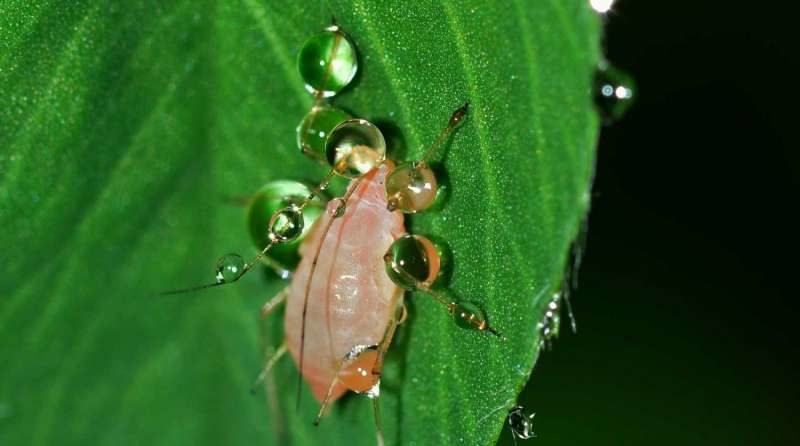
They found that when the insect feeds on a leaf it triggers the plant to admit calcium into the damaged cells. This small flux of calcium prompts the plant to signal that an attack is underway, and a larger amount of calcium is then mobilized from within the cell.
These discoveries were the result of a collaboration between Professors Saskia Hogenhout and Dale Sanders. Professor Sanders elaborates on the findings: “We now know that when an aphid feeds on a leaf, the plant uses calcium as a warning signal. This signal forms part of the plant’s defense mechanism. By understanding this, we are one step closer to understanding how we may be able to reduce the damage done by pests such as the aphid.”
It is well known that calcium ions increase in plant cells in response to stimuli from their environment. Before this study, it was unknown if this happened as a response to aphid feeding or if the plant used the calcium as a warning signal following aphid attack.
Aphids are a major pest of crops, vegetable, fruit, and ornamental plants. Understanding how plants respond and ultimately defend themselves from an attack is important for identifying ways in which these pests can be managed.
“Understanding the mechanisms involved in the early stages of feeding may provide information on how we can stop the aphid in its tracks and prevent virus transmission” contributes Professor Saskia Hogenhout.
Read more at Phys.org.