

Late blight confirmed in Michigan field
Potato late blight has been confirmed in a commercial field in Michigan. Experts strongly recommend preventative foliar programs and diligent crop monitoring





Potato late blight has been confirmed in a commercial field in Michigan. Experts strongly recommend preventative foliar programs and diligent crop monitoring.
Late blight was confirmed July 23 in the southwestern edge of St. Joseph County, according to a report from Amanda Gevens, Plant Pathology chair, professor and Extension specialist at the University of Wisconsin-Madison. The disease was noted in a section of field less than five square feet, according to the report, which identified the genotype of the Phytophthora infestans pathogen as US-23.
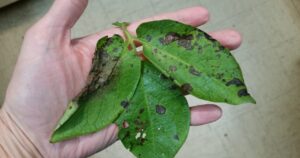
Potato late blight has been confirmed in a commercial field in Michigan. File photo courtesy of University of Wisconsin-Madison.
“Recall that US-23 can typically still be managed with phenylamide fungicides including mefenoxam and metalaxyl,” the report reads in part. “Thank you to Rob Schafer of Mid-Michigan Agronomy for quickly working on this diagnostic and sharing the information so that producers in the region can take enhanced action to manage this disease.”
Current late blight risk is low to medium in Michigan, though some areas have experienced favorable conditions in the past several weeks because of frequent and heavy rain. Late blight forecasting for the Upper Midwest is available through the UW-Madison Vegetable Disease & Insect Forecasting Network.
Gevens talked with Spudman about evolving technology to prevent and treat late blight in March.
Since early July reports of potato and tomato late blight in Ontario, Canada, no other regional detections have been documented. No Phytophthora infestans DNA has been detected from experimental spore samplers maintained by the MSU Potato and Sugar Beet Pathology program, currently deployed in research and commercial fields in Montcalm County.