Jun 16, 2005Epidemic Similar to 1997 Could Be Seen
The probability for late blight in southern Idaho is extremely high in 2005, according to the Treasure Valley & Pacific Northwest Pest Alert Network. The amount of precipitation and the number of hours favorable for late blight pathogen establishment have been very high all across southern Idaho. The probability of seeing disease ranges from 95 percent to 99 percent. These values are higher than what was observed in the bad late blight years of 1997 and 1998.
Protectant fungicides are very similar to sunscreen in that they wear off over time and only protect where they are applied. If thundershowers persist through the coming weeks, growers are advised to begin spraying at row closure and continue on a weekly schedule for 4 weeks. This can be done using standard protectant fungicides such as EBDC based products or chlorothalonil (See www.ag.uidaho.edu/potatopath/diseases_lateblight_fungicides.htm) While this is an expense most growers have not had in the past, the late blight pathogen does not care, and cool, wet weather can fuel an epidemic similar to what was seen in 1997.
Fungicide stocks will also be low this year due to soybean rust in the Midwestern United States. Now is the time to line up the fungicides you plan to use this coming year. It is likely that some products may not be available later in the season.
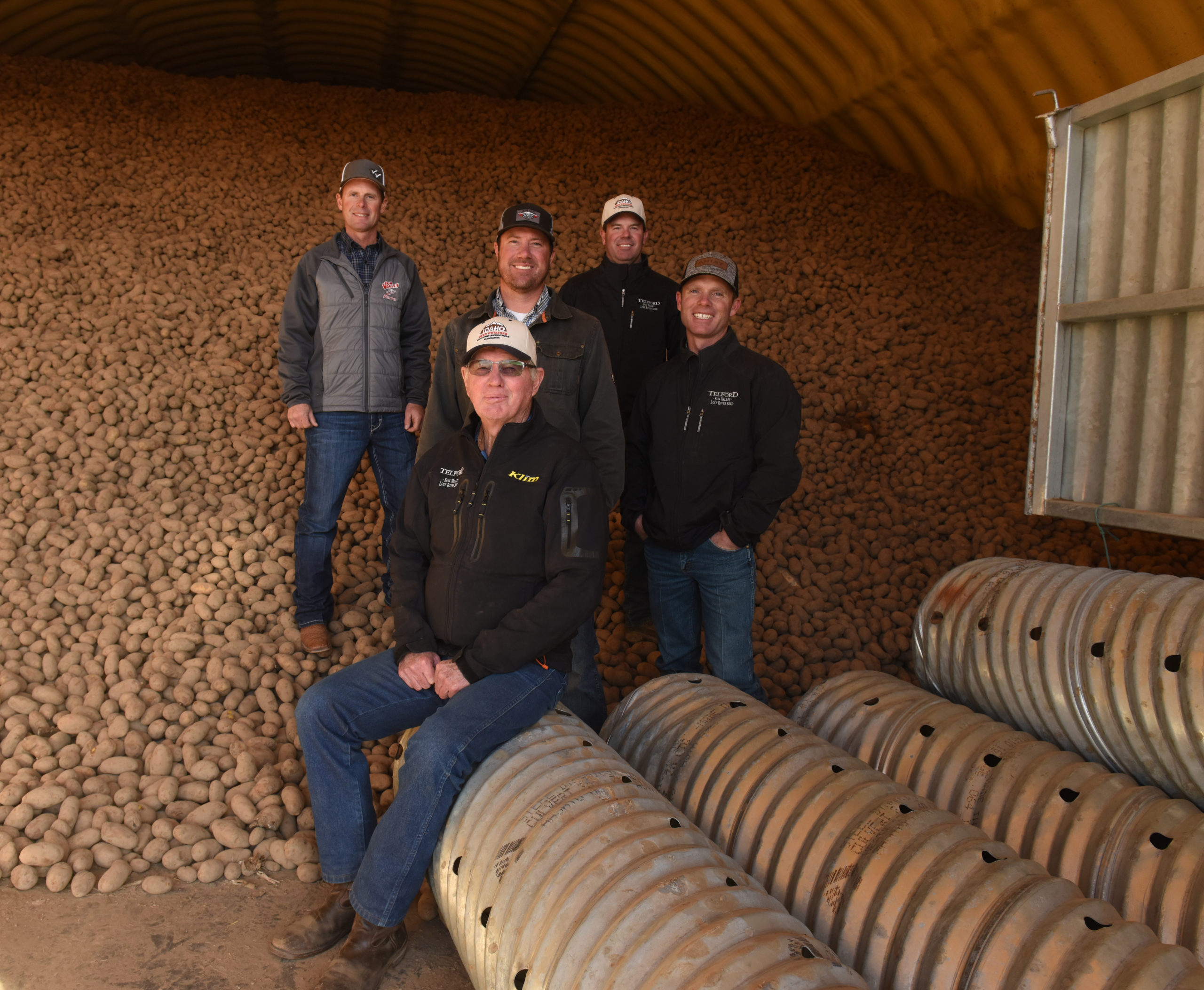
Volunteers and infected tubers from storage pose a threat for establishing an epidemic in 2005. Many commercial storages in southern Idaho have sprouting cull piles even at this late date. Manage cull piles and volunteers in order to minimize the threat of late blight this coming season.
For more information, call University of Idaho Extension personnel at the following numbers:
Treasure Valley: (208) 722-6701 (Mike Thornton)
Magic Valley: (208) 736-3600 or 423-6621 (Nora Olsen)
Eastern Idaho: (208) 529-8376 (Phil Nolte); (208) 785-8060 (Bill Bohl); or (208) 397-4181 (Jeff Miller)