

Cornell celebrating 160 years of potato breeding collaboration, success
Cornell University’s potato breeding program, celebrating 160 years, has developed 50-plus varieties. Discover factors behind its success.





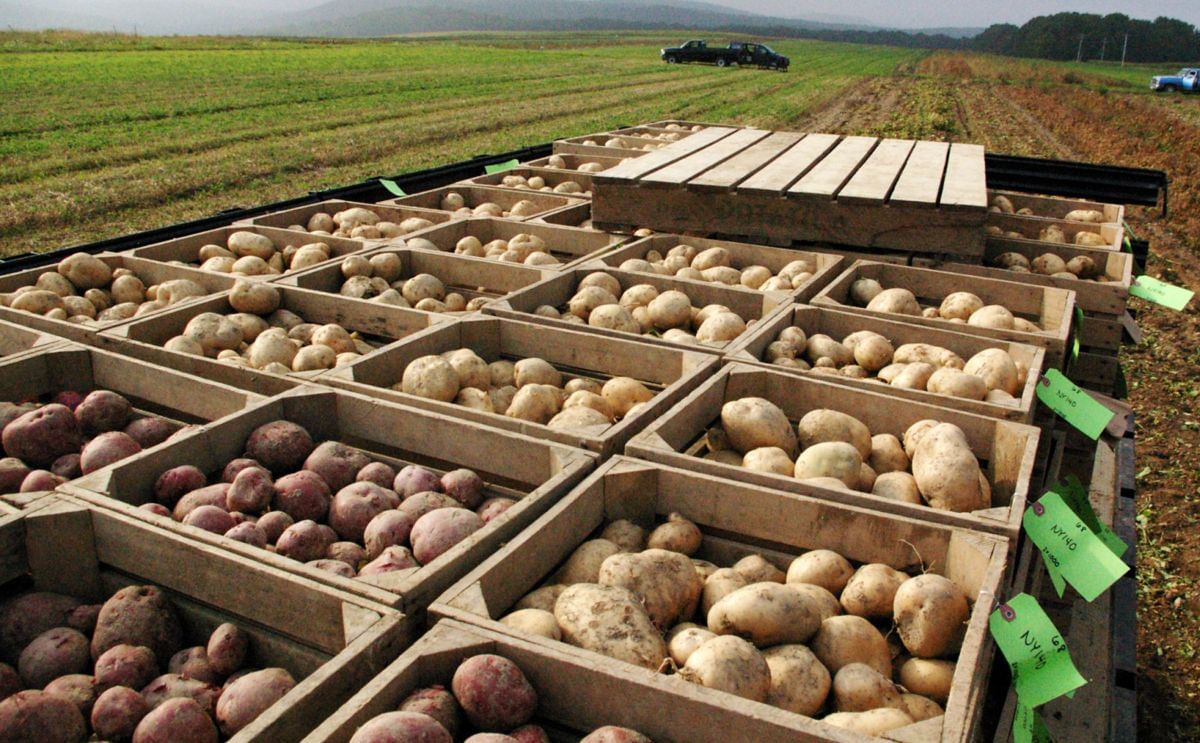
Cornell University’s potato breeding program, celebrating 160 years, has developed more than 50 potato varieties, including the most widely grown chip-making variety in the country.
Walter De Jong, a professor of plant breeding and genetics at Cornell, said the program’s success stems from collaboration.
“The processing quality of our potatoes is probably the best in the world, and that would not be possible without decades of cooperation between scientists, growers, and processors,” De Jong said in an article published by Cornell. “The breeding program I inherited was one with excellent communication between breeders and stakeholders.”

Freshly made potato chips from experimental Cornell varieties undergoing taste and quality evaluations. Photos courtesy of Cornell University.
From 1956 to 2000, Robert Plaisted, professor emeritus of plant breeding and genetics, led the potato breeding program, focusing on protecting potatoes from the golden nematode, a pest first discovered on Long Island in 1941. Traditional control relied on fumigation, but contamination concerns in the local water supply led to the discontinuation of that approach.
Plaisted and his colleagues acquired wild South American potato varieties resistant to nematodes and crossed them with Scottish varieties better suited for New York’s long daylight periods. These efforts produced nematode-resistant varieties, eliminating the need for fumigant pesticides.
Today, nearly every Cornell variety includes such resistance, which has spread nationwide as breeding stock for other programs.
Cornell also collaborates with N.Y. farms, such as Mahany Farms and CSS Farms, to test new varieties for yield, pest and disease resistance, drought tolerance and storage quality. Mahany Farms primarily grows chip-quality potatoes for Wise.
“We participate in these trials because it matters — not just for ourselves but for other growers,” grower Gary Mahany said.
Funding from the Cornell University Agricultural Experiment Station and USDA’s National Institute for Food and Agriculture has also enabled long-term research.