

Chefs sample U of I’s potato expertise in reverse trade mission
Thirty-one chefs from throughout the world recently toured a new laboratory at the University of Idaho as part of a trade mission. Learn more





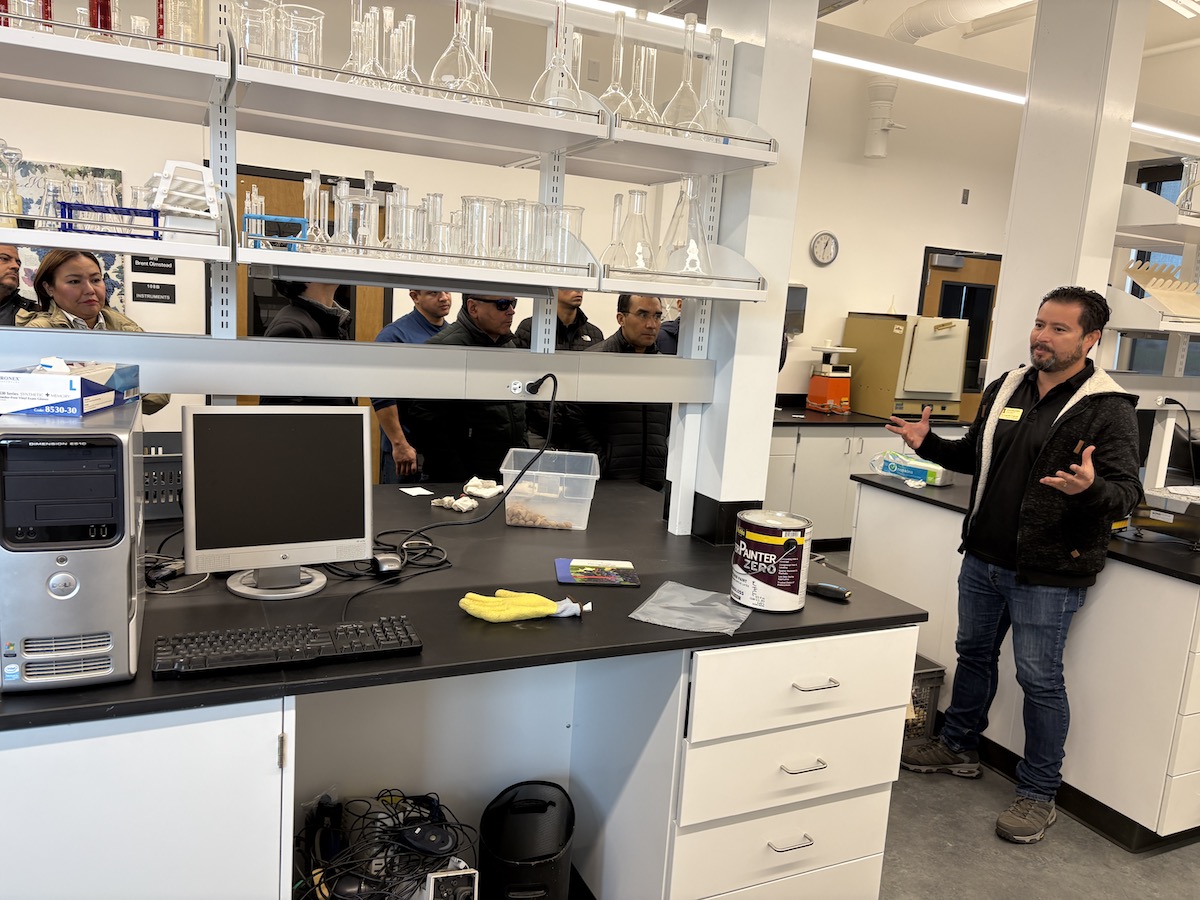
The chefs, many of whom conduct culinary research and development for large international eateries and restaurant chains, made a stop at U of I’s year-old, 9,600-square-foot Idaho Center for Plant and Soil Health as part of a reverse trade mission organized by Potatoes USA, the nation’s potato marketing and promotions organization.
Potatoes USA representatives invited chefs from a dozen global markets for U.S. potatoes to join the tour. Chefs were chosen based on the volume of U.S. potato products they’re already using and their potential to increase their U.S. potato orders.

Thirty-one chefs from throughout the world recently toured a new laboratory at University of Idaho’s Parma Research and Extension Center as part of a reverse trade mission organized by Potatoes USA. Photos courtesy of University of Idaho.
The reverse trade mission also visited Idaho potato farms, frozen potato processing facilities and a facility specializing in snack food and potato processing research and development, educating the chefs about the U.S. potato supply chain. The trip concluded in Chicago, where the chefs experimented with U.S. potatoes and created their own innovative products.
Domingo De Obaldia, a chef who owns several restaurants in Panama, was thrilled to have the chance to ride aboard a potato harvester at a Treasure Valley farm and see how efficiently the machine unearthed and loaded spuds. He was also impressed by the potato research findings presented by U of I Extension faculty in Parma.
“Coming here and seeing all the studies they do to make Idaho potatoes as world renowned as they are in terms of quality, production, yields and all of that — it’s incredible,” De Obaldia said.
Chefs were especially interested in the modern irrigation systems used on the farms they visited, as well as the emphasis that farmers place on keeping foreign materials out of their crops.
James Woodhall, a U of I Extension specialist of plant pathology who organized the Parma tour, relished the opportunity to share the university’s new state-of-the-art Idaho Center for Plant and Soil Health with an influential international audience. Parma faculty highlighted the center’s important contributions toward potato variety development, minimizing impacts of potato insect pests, advancing storage physiology science and diagnosing diseases, including efforts to predict risk and prevent crop infection.
“The new facility is one of the best facilities in the western U.S.,” Woodhall said. “It’s good to show we’re working in a quality, cutting-edge environment. If we have the right environment to do the work, then we’ll also have the quality, cutting-edge research and provide that information to our stakeholders.”
Mike Thornton, an emeritus professor of plant sciences who specialized in potato and onion agronomy in Parma, gave the chefs a history of the center and an overview of other crops studied at the facility. The station originated in 1925 as part of an effort to address a problem affecting alfalfa seed.
“We’re known worldwide for our seed crop production,” Thornton told the group. “We’re No. 1 in sweet corn, alfalfa seed, carrot seed and onion seed production. If producers in your country plant those crops, there’s a good chance they are planting seed from Idaho.”
Potatoes USA hosts a reverse trade mission annually, alternating between inviting international chefs and then importers and distributors working in international food retail and foodservice.
The reverse trade missions are funded with USDA Market Access Program dollars, in addition to a 10% match from Potatoes USA.
About 20% of the U.S. potato crop is exported internationally, and Potatoes USA’s reverse trade missions have played a major role in boosting global demand. For example, participation in a past reverse trade mission led Grupo Barrio, a leading restaurant group in Nicaragua, to grow
its potato purchases by 50%, and L.A. Chicks, a fast-casual chain in the Philippines, began sourcing U.S. fries valued at approximately $17,000 annually.
“This is a monumental experience for these chefs,” Stein said. “They’ll go back and remember this experience for years to come, and they’ll talk about it.”
— University of Idaho