

Why does wash water become harder to manage the longer a potato packhouse runs? (Sponsored)





Ask the Expert
(Sponsored) For many potato processors, wash water performs well at the start of a production run but becomes increasingly difficult to manage as the day progresses. Water loses clarity, spray systems become less effective, and operators often find themselves adding more fresh water or carrying out dump-and-refill cycles to maintain acceptable performance.
While it is easy to blame a specific machine or process step, the underlying cause is usually much simpler: the gradual accumulation of fine solids that remain suspended within the recirculating water system.
Most potato wash lines are designed to remove large contaminants such as rocks, vines, leaves, and larger organic debris. These materials are relatively easy to separate and remove. The bigger challenge is what happens to the finer contaminants that pass through primary filtration systems.
Over time, fine sands, starch particles, potato skin fragments, organic fibers, and suspended solids build up within the water. In potato processing lines in particular, starch released during washing increases the suspended solids load and dissolved organic content, often raising BOD levels and creating a pungent odor. This makes these fine contaminants more difficult to manage than in many other produce applications.
These particles continue to circulate through pumps, spray bars, polishers, and wash equipment, steadily changing the characteristics of the water itself.
According to Renier Sevenster, Wyma Solutions Senior Water Treatment Specialist, the impact of these fine contaminants is often underestimated.
“The mistake many processors make is assuming the water problem has been solved once the larger debris has been removed. In reality, it is the build-up of fine solids that determines how long water can be reused before performance starts to decline.”
As suspended solids increase, the water becomes more difficult to use effectively throughout the wash line. Spray nozzles and pumps may experience greater wear, water clarity declines, and the overall washing process becomes less consistent.
To compensate, operators often increase fresh water make-up rates or replace water entirely. While this may restore performance temporarily, it also increases operating costs and wastewater volumes.
This challenge is becoming more significant as water costs rise and processors face increasing pressure to reduce consumption without compromising throughput or product quality.
Rob Morphet, Product Portfolio Manager at Wyma Solutions, believes water management is now becoming a strategic operational issue rather than simply a utility cost.
“We’re seeing more customers ask how far they can realistically extend water reuse while maintaining consistent washing performance. Water is no longer viewed as an unlimited resource. It has become an important operational input that needs to be managed and optimized.”
The good news is that processors do not necessarily need to redesign their entire wash line to improve water quality.
In many applications, introducing additional filtration stages designed to target fine suspended solids can significantly improve water reuse outcomes. Removing the fine fraction helps stabilize water quality, reduce loading on downstream equipment, and extend the useful life of recirculated water.
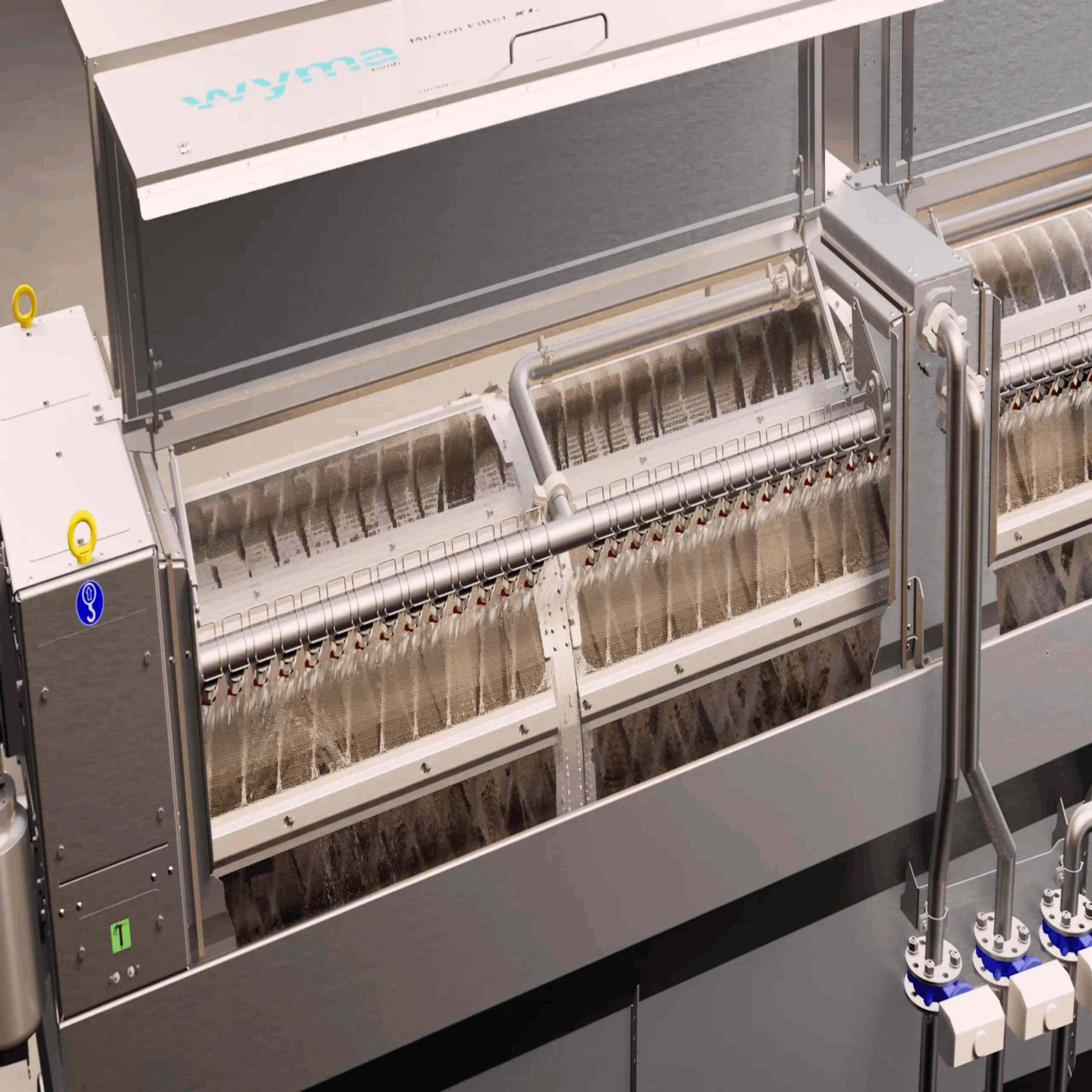
This is the thinking behind the latest generation of high-capacity filtration systems entering the market. Wyma’s recently launched Micron Filter XL, for example, was developed specifically to address fine solids that bypass traditional primary filtration stages.
Rather than removing larger debris, its role is to target the contaminants 100 US Mesh (0.006 inches) and above that gradually accumulate during production and have the greatest influence on water quality over time.
Improving water quality can also have a positive effect on downstream finishing operations.
Equipment such as polishers performs best when supplied with consistent water conditions. Excessive suspended solids can affect cleaning performance and increase maintenance requirements throughout the wash line.
According to Leighton Hill, Americas Sales Manager at Wyma Solutions, processors are increasingly taking a whole-system approach.
“The most successful projects tend to look beyond individual machines and focus on how water moves through the entire process. When you improve water quality at the source, the benefits can be felt throughout the wash line—from reduced fresh water demand to more consistent equipment performance.”
For potato processors planning facility upgrades ahead of the next season, this systems-thinking approach is becoming increasingly important.
Ultimately, maintaining effective wash water is not simply about removing visible debris. It is about managing the fine contaminants that accumulate throughout production. As water costs, sustainability expectations, and operational demands continue to increase, processors that understand and address this challenge will be better positioned to improve efficiency, reduce waste, and maintain consistent product quality.
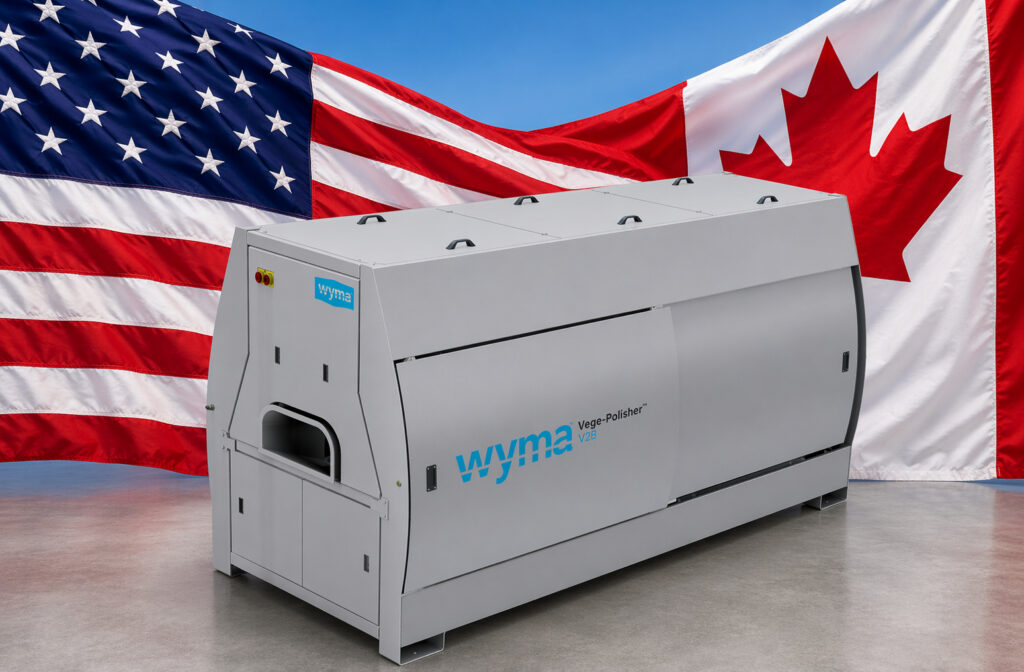
To provide key equipment for North American customers, Wyma is manufacturing a stock of the world-famous Wyma V2B Polishers for shipment to Volm Companies. With units available for near-term delivery, growers and processors have an opportunity to improve both water handling and finishing performance as part of broader operational improvement programs.
For more information, visit wymasolutions.com