

Lake Winnipeg Basin project demonstrates value of water stewardship
In the Lake Winnipeg Basin of southern Manitoba, Canada, four farms have proven that water stewardship is not just good environmental policy — it’s good business.





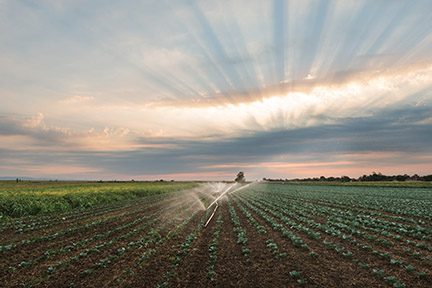
In the Lake Winnipeg Basin of southern Manitoba, Canada, four farms have proven that water stewardship is not just good environmental policy — it’s good business.
The Lake Winnipeg Basin Water Stewardship Project Phase 2 report, released in early 2026, provides a comprehensive analysis to date of the environmental, social and economic value created through on-farm water stewardship practices – and what that means for impact in the broader watershed. The project builds on earlier work that used the Alliance for Water Stewardship (AWS) standard to guide farm-level planning and implementation of water stewardship.

What makes this effort different is the rigor of the analysis. Using third-party EcoMetrics methodology grounded in social return on investment (SROI) principles, researchers quantified not only water-related improvements but also the broader co-benefits delivered to producers, communities, supply chain partners and the environment through ecosystem services.
Phase 1 of the project focused on developing water stewardship plans for four commercial farms located in the Central Assiniboine, Redboine and Pembina Valley watersheds. Phase 2 evaluated three years of actual implementation data (2023 to 2025), comparing stewardship practices against a modeled “traditional farming” baseline.
Across the four farms, the average cultivated acreage was approximately 43,700 acres over the three-year study period. Potatoes accounted for nearly 19% of the total acres in 2025, alongside cereals, corn, canola, soybeans and other rotational crops.
Participating farms implemented a range of water stewardship practices, including:
• use of nitrogen inhibitors and slow-release nitrogen fertilizers
• split application and fertigation of nitrogen
• variable-rate application of fertilizer
• irrigation scheduling using soil moisture sensors
• strip, zero and minimum tillage
• short-term cover cropping postharvest
• application of composted manure
• recycling of tile drainage water into irrigation reservoirs
These practices were selected through watershed-informed planning using the AWS standard as a guide.
The results are compelling: Across cultivated acres, farms generated an average of $6,949 per acre in incremental value (SROI) compared to the traditional baseline. This value reflects avoided costs, ecosystem services, productivity gains and social benefits directly tied to improved stewardship.
The total annual incremental social value across the four farms was approximately $296 million in 2023, $316 million in 2024 and $299 million in 2025.
Nitrogen retention alone represents a substantial portion of this value. While nitrogen runoff under traditional practices creates negative cost implications, stewardship practices increase on-site nutrient retention and reduce downstream impacts, resulting in high avoided costs for farmers.
Other high-value outcomes included:
• habitat and biodiversity improvements
• pollinator population support
• water regulation
• carbon sequestration
• improved air quality
• enhanced food provisioning
Importantly, the analysis confirms that farms create value even under baseline conditions. However, stewardship practices substantially increase these values across multiple stakeholder groups.
In addition to in-field practices, some farms implemented “edge-of-field” improvements on non-cultivated acres, including riparian buffers and forage plantings. These actions provide additional ecosystem service benefits in terms of habitat, nutrient retention, storm-flooding protection and carbon sequestration.
For example, non-cultivated land practices in 2025 generate approximately $3.68 million in additional social value. The important takeaway? Water stewardship is most effective when it includes both cultivated and non-cultivated land enhancements.
Along with the Potato Sustainability Alliance, the Lake Winnipeg Basin project is supported by a coalition of partners, including farms, food companies, agricultural groups and environmental organizations. Their shared goal was to determine whether a credible business case could be made for investing in on-farm water stewardship in the region. The answer appears to be affirmative.

The Phase 2 analysis demonstrates that stewardship practices deliver value not only to producers through improved productivity, soil health and risk reduction, but also to governments, watershed authorities, supply chain companies and local communities through the ecosystem service they provide.
Water-related outcomes, such as nutrient cycling, water regulation and reduced runoff, improved measurably under stewardship implementation. Simultaneously, joint benefits such as carbon sequestration and pollinator support broaden the value proposition beyond water alone.
For potato growers, particularly those operating in sensitive watersheds, the Lake Winnipeg Basin project offers a model for aligning environmental performance with economic outcomes.
The data show that structured water stewardship planning and implementation, informed by watershed conditions and supported by credible measurement tools, can produce measurable returns. These returns extend across the value chain, strengthening social license, supply chain resilience and long-term farm viability.
As sustainability expectations continue to evolve, projects like this one demonstrate that proactive stewardship is not simply about compliance or optics but value creation.
The Lake Winnipeg Basin project makes one thing clear: When growers implement targeted water stewardship practices, the benefits ripple far beyond the farm.
To learn more and to read the Phase 2 report, visit potatosustainability.org/lake-winnipeg-basin.
Mike Nemeth is interim project lead for the Potato Sustainability Alliance.