

Spudman’s annual pest and disease survey highlights grower challenges and priorities
The 2026 Spudman Pest & Disease Survey highlights persistent threats and emerging issues shaping management decisions.





Pest and disease management remains one of the toughest challenges in potato production. The 2026 Spudman Pest & Disease Survey, which collected input from growers as well as professionals in packing, processing and storage, reflects operations ranging from small farms under 100 acres to large operations managing more than 5,000 acres.
Their responses highlight both persistent threats and emerging issues shaping management decisions heading into the coming season.
Download the full Pest & Disease Report
Common pest challenges
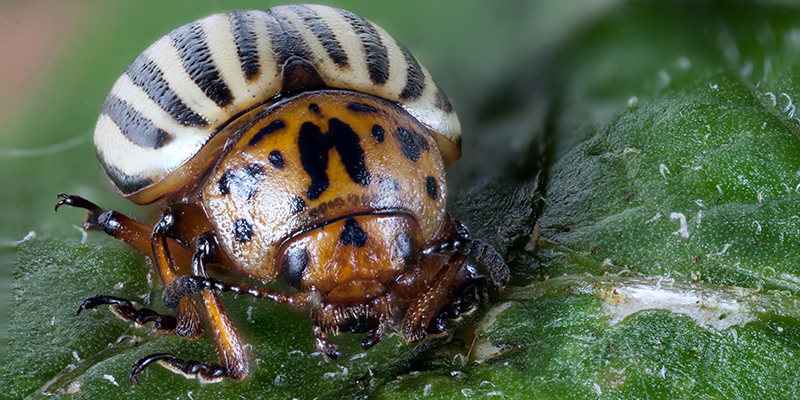
The Colorado potato beetle (CPB) continues to dominate the list of pest concerns. Nearly one-third of respondents identified CPB as a primary pest issue for 2026, reinforcing its reputation as one of the industry’s most persistent challenges.
Many respondents noted that insecticide resistance is complicating CPB control efforts and are looking for more information on non-chemical strategies to keep the prolific pest at bay.
Aphids remain another significant concern, particularly because of their role in spreading potato virus Y (PVY). While aphids ranked behind CPB in overall pest pressure, growers continue to monitor populations closely.
One survey respondent reported that “green peach aphids have been an increasing issue.”
Nematodes also remain on the radar for many growers, particularly when paired with other soilborne problems that can reduce plant vigor and tuber quality.
Diseases under the microscope
On the disease side, early and late blight remain the most widely cited threats. Blight continues to top the list of grower concerns in 2026, especially in regions where humid conditions favor disease development.
Powdery scab is also drawing increasing attention from growers across multiple regions. One respondent described it as a growing industry-wide issue, writing that “powdery scab continues to grow as the most pressing challenge facing potato production across the U.S.”
Another respondent highlighted how multiple pressures can overlap in the field: “Powdery scab and nematode counts continue to be a struggle.”
Several growers also pointed to emerging diseases. One respondent noted, “potato mop-top virus is the major new one,” reflecting growing awareness of the virus and its connection to soils infested with powdery scab.
What growers want to know
Beyond identifying pest and disease challenges, the survey also asked respondents where they would like more information. Many growers highlighted practical, research-based guidance they can apply in the field.
One respondent noted interest in “management strategies for pesticide-resistant pests, as well as approaches for handling warm potatoes to reduce storage rot.”
Others expressed a need for updates on new products and chemistries, including insecticides, fungicides and nematicides. As one grower put it, they are looking for “new chemistries and products to help control pests and diseases,” reflecting the ongoing demand for tools that address both persistent and emerging threats.
Growers also emphasized broader agronomic strategies, including crop rotation, mineral nutrient management and approaches that help reduce disease pressure before problems arise.
Looking ahead
While many of the pests and diseases highlighted in the survey are familiar foes, growers made it clear that the challenges surrounding them are evolving. Resistance issues, shifting disease pressure and emerging pathogens continue to add complexity to pest management programs.
The survey results reinforce the importance of continued research, field trials and knowledge sharing across the industry. As growers prepare for the 2026 season, they are looking not only for new tools but also for clearer guidance on how to use them effectively in an increasingly challenging production environment.