

PAPAS project makes strides in battle against nematodes
PAPAS stands for Potatoes and Pests – Actionable Science Against Nematodes. Launched in 2023, the four-year project is funded by a $6.8 million grant from the USDA’s Specialty Crop Research Initiative and focuses on providing growers with best management practices for controlling nematode infestations.





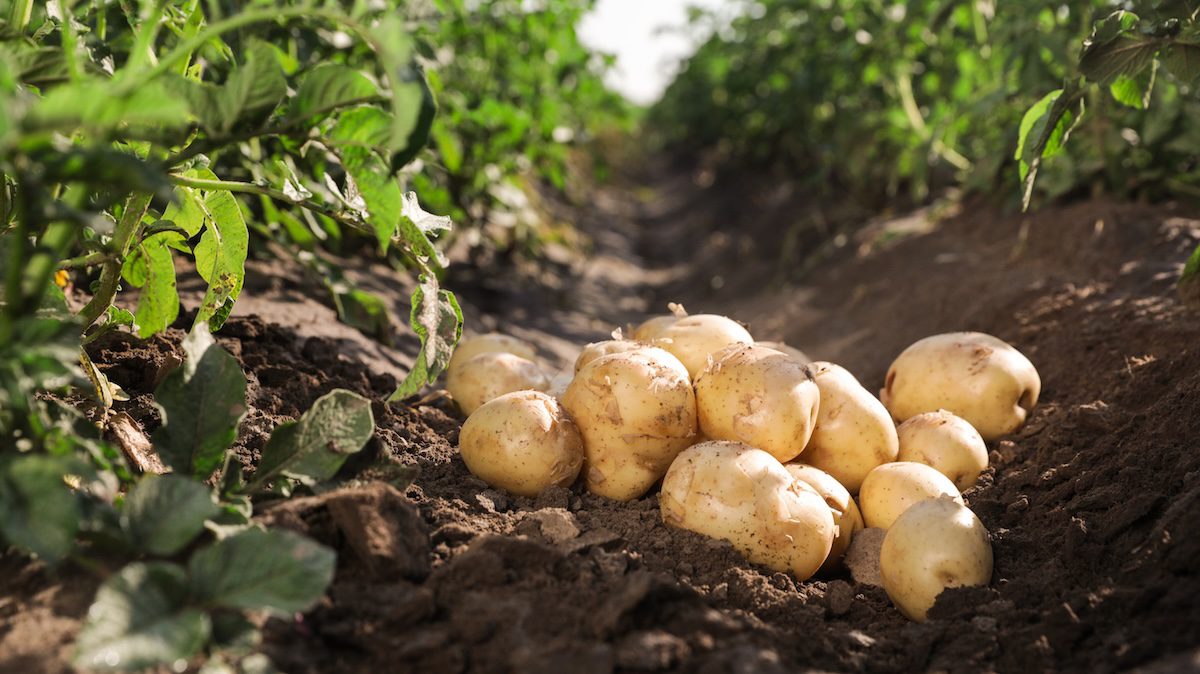
Potato plants, like any crop, battle enemies — including weather events and insects — visible to the naked eye. But one of the crop’s most potent adversaries is undetectable above ground: the potato nematode, which attacks plants from the soil.
Nematodes are microscopic roundworms that attack both the roots and tubers of the potato plant, reducing crop yield and quality while affecting marketability and processing quality. They pose a threat to the economics of the potato industry, and severe infestations can result in harmful regulatory restrictions.
As of early 2026, roughly 3,500 to 5,500 acres of U.S. potato land is infested by nematodes, with most infestations occurring in Idaho and New York, according to USDA.
PAPAS to the rescue
Enter the PAPAS project. PAPAS stands for Potatoes and Pests – Actionable Science Against Nematodes. Launched in 2023, the four-year project is funded by a $6.8 million grant from the USDA’s Specialty Crop Research Initiative and focuses on providing growers with best management practices for controlling nematode infestations.
The PAPAS team includes nematologists, plant pathologists, breeders, economists, computer scientists and Extension specialists from major potato-producing states. They are united in a fight against two primary types of nematodes that cause the most significant damage to potatoes. First are potato cyst nematodes, which are microscopic roundworms that parasitize plant roots, with specific focus on the pale cyst nematode (Globadera pallida) and the golden nematode (Globodera rostochiensis). Also in the project’s crosshairs are root-knot nematodes, which also invade root systems and cause swollen knot-like growths that impair the plant’s water and nutrient uptake.
The northern root-knot nematode (Meloidogyne hapla) and the Columbia root-knot nematode (Meloidogyne chitwoodi) are particularly troublesome.
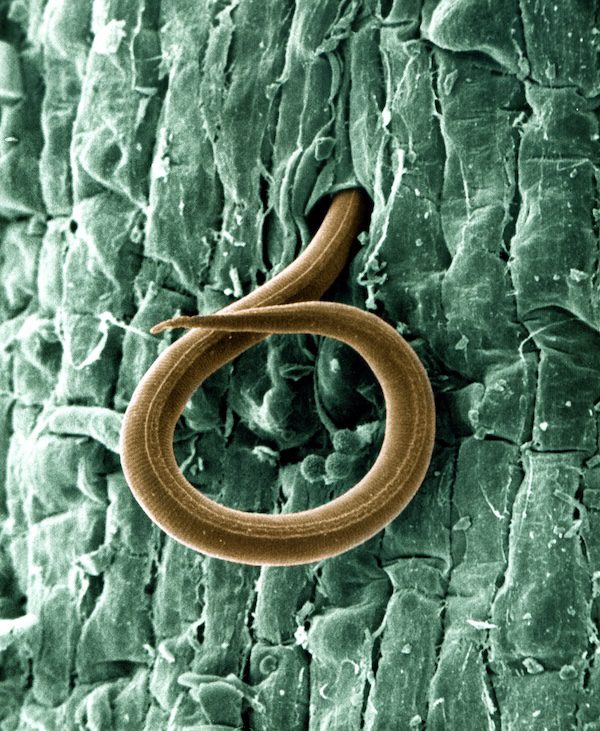
systems and cause swollen knot-like
growths that impair the plant’s water
and nutrient uptake. Photo courtesy
of USDA.
The PAPAS project is led by director Louise-Marie Dandurand, a professor in the Department of Entomology, Plant Pathology and Nematology at the University of Idaho.
“My role as a researcher is to support the eradication effort of nematodes so growers in infected areas can go back into potato production,” Dandurand said. “Our team at PAPAS includes potato geneticists, breeders, economists, analytical chemists, big data people — each with our specialties, all working to push research forward and develop strategies to eradicate nematodes.” In the past year, PAPAS research achieved several milestones in that ongoing battle.
Faster identification
Quick identification is essential for managing nematodes, and the team worked on molecular methods to make the process faster and more accessible. The team developed a new LAMP (Loop-Mediated Isothermal Amplification) test specifically for the pale-cyst nematode that identifies the species in roughly 30 minutes, requires simple equipment and is more sensitive than traditional testing. A national diagnostic workshop trained 12 researchers and diagnosticians in these tools.
Predictive models
PAPAS researchers focused on developing stronger decision-support systems to help growers evaluate nematode risk, yield impacts and management options. Historic records from USDA’s Animal and Plant Health Inspection Service (APHIS) combined with data sets from Idaho and New York are being used to build models to better predict where nematodes are likely to be found and how best to sample for them.
Rotation and trap crops
Field studies in Idaho evaluated trap crops, or crops intentionally grown to attract agricultural pests and lure them away from a main crop. The PAPAS studies showed promising results from the use of litchi tomato (Solanum sisymbriifolium), which reduced intrusion from the pale-cyst nematode by up to 100%. Quinoa also reduced pale-cyst intrusion, and findings showed three-year rotations of these crops achieved near-eradication. Research also found that butanol produced by the litchi tomato showed promise as a natural nematicide.
Breeding resistance
Developing long-lasting nematode resistant varieties is one of the most important goals for the industry. PAPAS studies introduced genes into potato plants that significantly reduced nematode reproduction. The research team also cloned a new resistance gene and screened wild potato species, which produced a collection of parents resistant to nematodes. These were incorporated into breeding populations, which are now being screened to pinpoint nematode-resistant genes.
Industry impact
The work of PAPAS has received ongoing support from growers and industry stakeholders.
“One of the nice parts of this project is we find that the industry really wants to hear from us and they want to give us input. There really is an exchange of information,” Dandurand said. “We give talks and regularly interact with growers. It’s been great to see how interactive the potato industry is with researchers.”
PAPAS also examines the serious economic impact that nematodes can have on the potato industry and larger economy. Philip Watson, an agricultural economist and professor in the College of Agricultural and Life Sciences at the University of Idaho, said managing a nematode infestation can cost a grower up to $500 per acre, and that 100 acres of productive potato land lost to nematodes can create a regional economic impact of $500,000 to $1 million.
“Certain nematodes can force a massive quarantine or shutdown of entire fields, and the costs from that ripple out to everyone from suppliers to the local economy surrounding potato farms,” Watson said. “Potato nematodes represent one of the most costly hidden threats to the industry, and the impacts go beyond the farm gates to the local economy and consumers in general.”
Breeding nematode-resistant varieties — a solution that could stop the threat in its tracks — is a core focus for PAPAS co-director Walter De Jong, a professor in the plant breeding and genetics section of the School of Integrative Plant Science at Cornell University. De Jong has worked for years to improve potato genetics through both conventional and molecular means. His breeding program focuses on developing new chipping and tablestock varieties that are adapted to the Northeast.
His highest priority is developing varieties that are resistant to the golden nematode, which is present only in New York. His work battling that pest also provides important insight into developing plants resistant to other strains.
“Potato nematodes are a problem that people don’t usually talk about unless they have a serious infestation on their farm or in their area,” De Jong said. “Working with PAPAS has been useful to me because I can bounce ideas off other breeders and nematologists. Ultimately, in the long term, the best way to control these nematodes is through breeding and resistance, and working with other nematologists is a huge benefit.”