

New automated tech digs deeper and faster into soil health
A Netherlands-based agritech startup aims to make measuring soil health a more scientific process — and improving it more efficient.





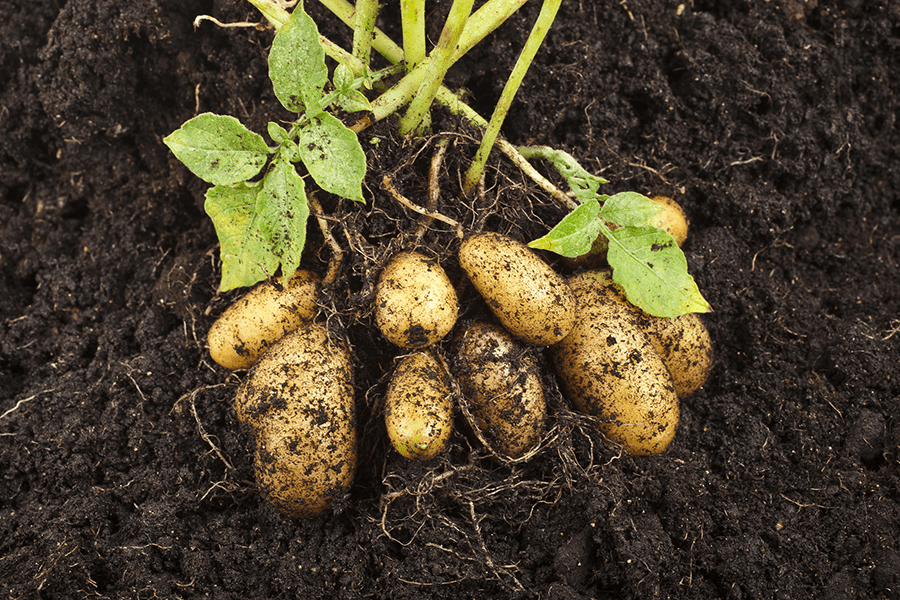
As the old adage goes, you can’t manage what you can’t measure. A Netherlands-based agritech startup aims to make measuring soil health a more scientific process — and improving it more efficient.
Antonie, founded in 2021 by Bob Klein Lankhorst, Peter den Hartog and Jerome H. Mol, uses automated microscopy and artificial intelligence to provide accurate, affordable biological soil analysis. The company is named as an homage to Antonie van Leeuwenhoek, the 17th-century Dutch pioneer who first described nematodes with a self-built microscope.
While working as a soil consultant, Lankhorst realized he needed a better understanding of what he was trying to improve. He found traditional ways of measuring soil biology limited by data and cost.
“The preferred way of looking and observing soil life was expert-dependent, time-consuming and too expensive for any regular farmer to perform,” Lankhorst, now Antonie’s chief soil officer, told Spudman. “I got the idea of automating it: What if we could automate the microscope and build models to discriminate between the different things that we can picture using a microscopic camera?”
That brainstorm brought together experts in soil biology, data science and business, united by a mission to bolster soil health by making invisible ecosystems measurable and actionable.
The secret life of nematodes
The main character in Antonie’s efforts is the humble nematode. The most abundant animals on Earth, nematodes make up nearly four out of every five creatures on the planet — and most of the microscopic worms are harmless, if not helpful.
Free-living nematodes recycle nutrients and help determine soil health. Sensitive to environmental changes, nematodes can help gauge the impact of human crop interventions such as fertilization, pest control and tillage.
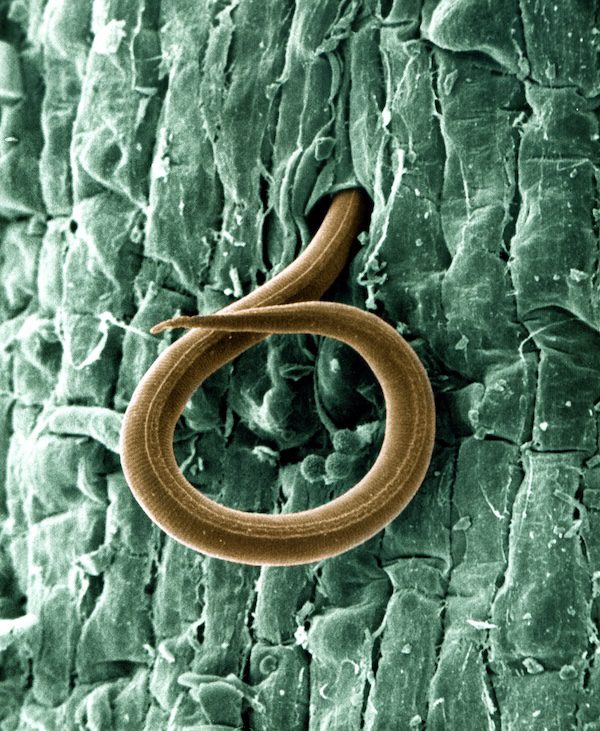
Some nematodes, however, are banes of potato growers. For example, root-knot nematodes sap plants’ vigor and cause blemishes, resulting in reduction of tuber quality and marketability, while golden nematodes (detected in New York) and pale cyst nematodes (detected in Idaho) feed on potato roots and deplete yields.
Knowing how many nematodes — and what kind — are present in soil samples can provide important clues to growers, but traditional extraction and counting methods involving scientists peering at soil samples through a microscope leave room for improvement.
Antonie’s approach combines automated microscopy with computer vision and machine learning to shift analyzing soil samples from a labor-intensive, expensive process to a cheaper, scalable option. The process counts organisms such as nematodes faster — identifying thousands in a sample — with a lower margin of error, Lankhorst said.
“If you were to do free-living nematode analysis, what an expert would do is identify between 150 and 200 nematodes in a sample,” Lankhorst said. “You can maybe imagine that if you’re looking at these creatures, often they’re still alive, so they’re wiggling all around. To count them is quite tricky. There is a lot of extrapolation going on there.”
Taking and learning from pictures of every step of analysis, Antonie’s software combs through hundreds of grams (one gram equals 0.035 ounces) of soil and identifies between 500 and 15,000 nematodes per sample.
“There are hundreds — actually, it goes into the thousands — of different species of nematodes,” Lankhorst said. “To have a taxonomist being able to distinguish and discriminate between all these different species is already challenging.
“If you know which types (of nematodes) you have in what amount, it says something about the ecosystem of the soil. What you are looking for is a balance, and a well-structured soil life with checks and balances. You want things to be in the right order, in the right magnitudes, with distributions that make sense.”
For the curious, Lankhorst said the most nematodes Antonie has found in one sample is 18,000 squirming in old forest soil.
Cashing in on soil health
In the Netherlands, Antonie is working with farmers, including potato growers, to track results of its solutions in the field.
“If you measure on several fields where you do several types of management practices through time, one can really see and understand what kind of management practice has what kind of impact on the soil biology population,” Lankhorst said. “If you do that consistently and also make good notes of these management practices, one can learn a lot from this.
“For us, what it’s really about is to work more efficiently with better yield, often resulting in better soil health. You get better yields by growing a better, more nutritious crop, while at the same time working on soil structure to be less dependent on irrigation and use less inputs like fertilizers or pesticides.”
That insight can be especially valuable as farmers face growing financial and regulatory motivation to monitor, maintain and improve soil health.

“Land or soil will become more of an asset,” said Johan Sloos, Antonie head of sales. “EU law makes land owners responsible for restoring soil health from a functional, biological point of view.”
Increased soil health could also impact crop insurance or bank loans, Sloos said, with land showing signs of long-term soil health presenting a more appealing loan risk. For farmers in search of healthier soil without investing time and money in extensive testing, Antonie could provide an avenue to achieve those goals.
“From all sides, they’re being pushed to do more testing, more data management, and that’s not necessarily what a farmer wants,” Sloos said. “They want easy solutions that see as much as possible and really bring value to their farm.”
With a European foothold established, Antonie is expanding into North America, with a U.S. base in San Francisco.
“There’s a lot of room to grow for us, but also different reasons to take responsibility for soil health in the future as an asset that will grow in value but also in responsibility,” Sloos said.
Lankhorst said Antonie is developing models specifically focused on problematic root-knot, cyst and golden nematodes. He said other crops, such as tea and soybeans, can also benefit from the emerging technology’s ability to excavate answers.
“What we find really important is that we have contact with the land user, the farmer, because the one who is in the field always knows the best about the field. We cannot figure out how a field functions only from data,” Lankhorst said. “We want to connect with existing farmer networks, existing laboratories that have networks, and existing advisor groups to give them this extra piece in the toolbox.
“We are not a consultancy company. What we want to do is give tools for advisors and for farmers themselves that help them in making decisions that are based on data.”