






Microscopic organisms fueling big idea
When you hear the word algae, you probably think of something green that grows on the top of a pond or needs to be cleaned out of a swimming pool.
Algae, however, is also present in soil and can be used to improve the overall health of a farm. Microalgae are microscopic single-celled organisms that live in the soil and play a crucial role in its health and fertility.
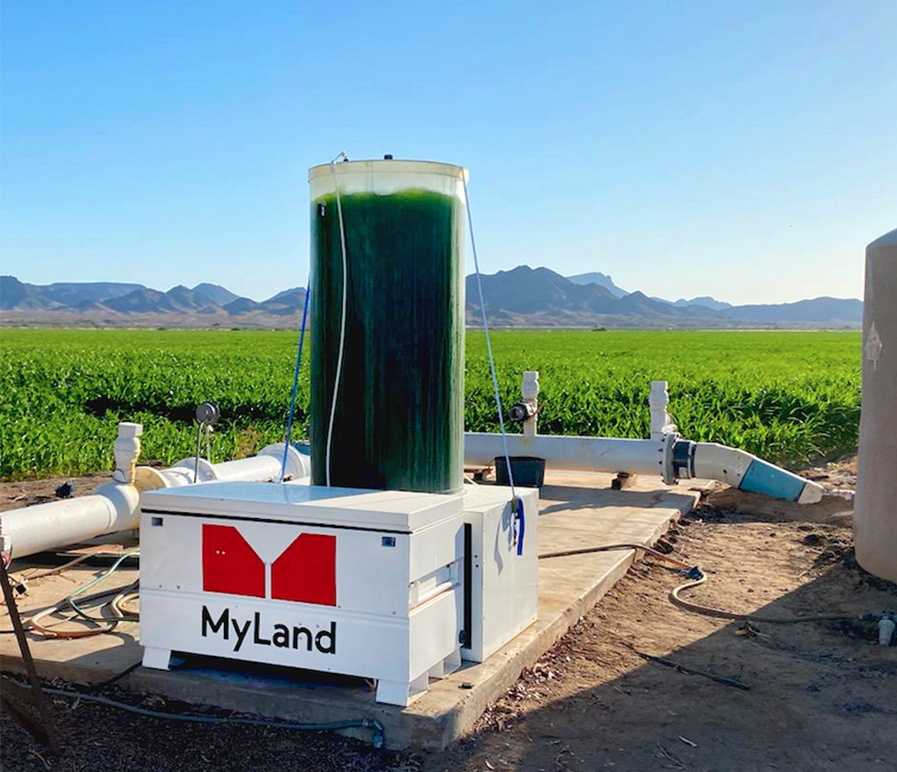
Phoenix-based soil health company MyLand is raising awareness about microalgae and what it can do for farmers through its Soil as a Service systems, which connect directly to a farm’s existing irrigation infrastructure and introduce live, native microalgae into the water stream.
The systems recently received the 2025 Agtech Breakthrough Award for Overall Smart Irrigation Solutions.
BELOW-GROUND BENEFITS
According to company surveys, delivering this microalgae back into the soil through irrigation restores natural biological processes and results in benefits like enhanced water use efficiency, higher yields, better-quality produce and increased resilience.
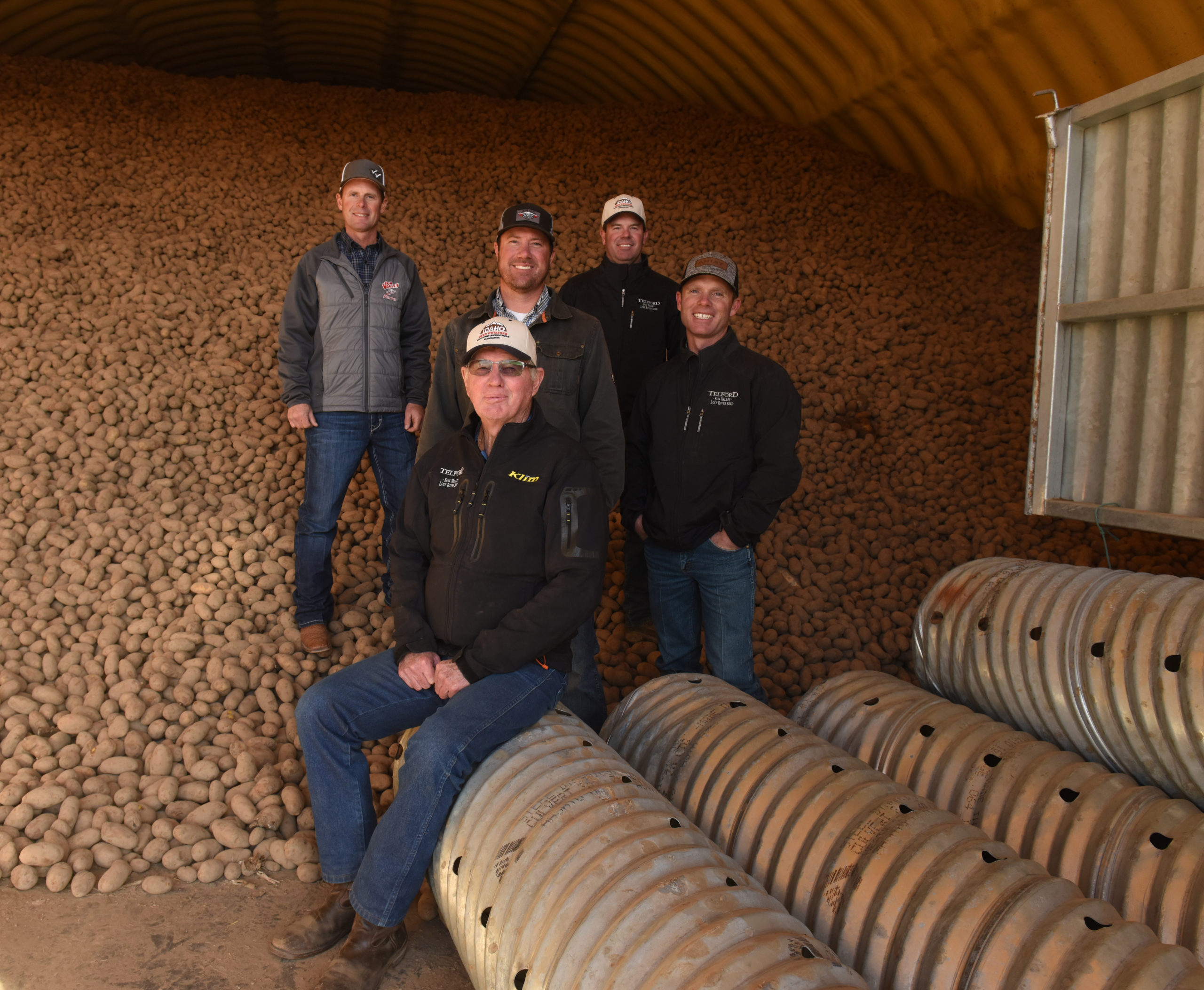
The technology has been used successfully on a variety of crops, including potatoes.
“We’re a soil company with a unique approach to improving soil health,” said Dave Booher, MyLand senior vice president of sales. “We use the live native microalgae to influence the biological and chemical properties of the soil.
“People ask why microalgae because they think of stuff that is in a pond or a canal that people try to kill. All agricultural soils have algae present, and we work with algae that is already present on every farm we serve. We create a system that works with that farmer’s own strain of microalgae.”
MyLand systems are installed, managed and maintained by the company and are scalable to existing farm infrastructure.

Workers from MyLand take soil samples from client farms and extract the native microalgae, which is then transported to the company laboratory in Phoenix. There, samples are placed in an aqueous solution so technicians can separate out the different strains of microalgae — typically five to 10 per sample.
“We find some that we think are going to be resilient in the soil, and from there we continue to increase the strains in size from petri dish to test tube to large beaker until we have a usable quantity,” Booher said.
In the interim, field teams install the patented MyLand irrigation system on the client’s farm. Once the samples are large enough, they’re sent back to the farm “in breathable bags like you ship fish in,” Booher said, then fed into algae breeding vessels installed on the farm.
Fed by a small amount of nutrients, the algae grows and densifies before being added to water through the farm’s existing irrigation infrastructure.
There’s no need to make another order of algae — once installed in the vessels, the microalgae will continue to reproduce itself with an average turnover cycle of about 10 hours.
ROOTS OF MICROALGAE’S ROLE
Booher offers an example from human biology to explain why microalgae’s function is so important to soil.
“People might take a probiotic to help their own gut microbiome to function better — this is very similar to that,” Booher said. “If you can increase and help with active microbial population diversity in the soil, you get a much better balance in the soil and help the symbiotic relationship between soil and plant.
“Microalgae is the basic building block of the soil food chain. You have bacteria and fungal populations in the soil that will feed on the microalgae, which itself is already a source of carbon for the soil. As algae dies off, it feeds the other microbes already present.”
Reintroducing the tiny organisms back to the soil through irrigation yields results ranging from increased organic matter to improved soil aggregation and porosity, which support better gas and fluid exchange of gases and better water penetration, Booher said.
He understands, though, why some growers might initially be skeptical of algae as a farming tool.
“We get asked ‘Is it going to work?’” he said. “The thing is, the microalgae is already at work, just not in high enough concentration to cause noticeable effect. With every irrigation cycle, more algae is put on the fields, and we begin to see its effects through aggregation.”
The system is designed to work with any crop that uses irrigation.
“We pride ourselves in being crop agnostics — it’s all about the soil health,” Booher said. “The plant that’s being grown is the benefactor.”
GROWING PRESENCE
Potato growers in Washington, California and Texas reported positive yield results this year after adopting the system, according to company reports. Results included a 20% yield bump at one Washington farm and a 21% increase on a Texas farm that produces chipping potatoes.
MyLand launched in 2014 and has been working on a commercial basis for five years.
The company’s focus on microalgae developed after one of the three founders met a man growing algae in a kiddie pool that he provided to a variety of Arizona farmers for use on their fields.
The founders wondered what would happen if microalgae custom to an individual farm was grown in a high concentration in a closed growing system, and the idea for MyLand’s microalgae concept was born.
The company currently serves client farms in Arizona, Washington, California, Arizona and Texas, and is launching a pilot project in Alberta, Canada.
MyLand’s technology is being used on more than 30 crops, including apples, pistachios, almonds, citrus fruits, onions, cabbage, celery, peppers and melons, as well as traditional row crops like sorghum, cotton and sugar beets. The system was recently employed to grow hops in Washington state for the first time and is being introduced on figs in California.
The company is working to introduce new technology, including designs for algae production vessels that will create even denser levels of microalgae.

Use of the soil systems has helped growers improve efficiency. Booher cited a pistachio grower in California who was able to drastically cut costs on soil inputs such as nitrogen, gypsum, compost and sulphur to buffer the ph.
In another location, a pepper grower was able to increase the time between irrigation cycles after using microalgae in irrigation, while alfalfa and tree growers have reported increased yields and the ability to scale back on water use.
Using microalgae to improve soil condition can also help growers build more sustainable and resilient farms amid a wide variety of weather and climate challenges.
“If you’re in an area that has a lot of high wind events, if you can increase the organic matter in the soil and provide better structure for the soil, you won’t have as much challenge with erosion,” Booher said. “If you can improve the soil to help plants be more resilient, that can help them survive extremes and drastic changes in temperature.”
Booher said that when MyLand began, U.S. research on microalgae’s soil health benefits was scant.
“When our company launched just over 10 years ago, if you looked for research papers on it here, there were maybe 30 or 40, whereas algae has been used in other cultures for years and years,” he said. “The science behind microalgae here in the U.S. is just now catching up.
“There is a lot we don’t understand here about what is below the soil surface as opposed to what is above. We treat the above-ground dimension pretty extensively. This is about figuring out how to unleash the power of the soil itself.”