

Growers harnessing crustacean connection
Chitosan presents dual-threat biological tool to growers looking to maximize yield and meet sustainability benchmarks. Learn more.


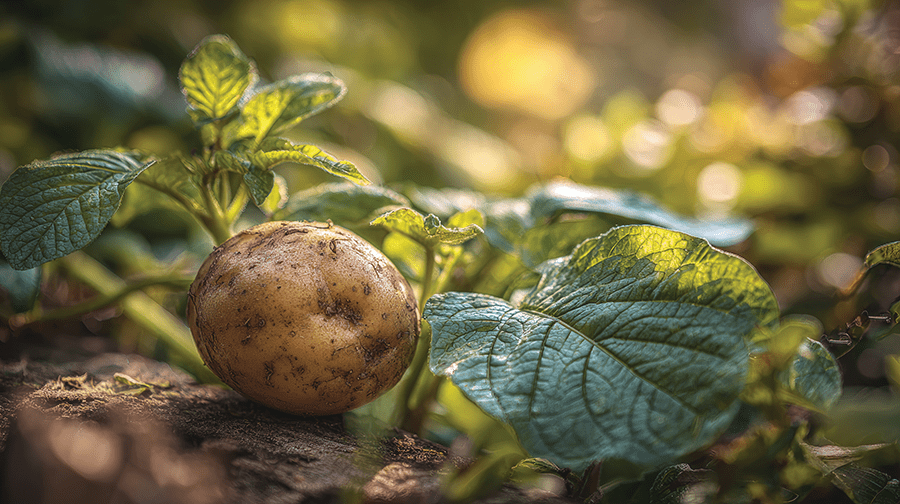
Crustaceans and chemistry may not the most common combination of concepts, but the unusual pairing has the potential to change root aspects of crop health and protection.
Ever-increasing challenges, such as disease pressure and resistance and a growing demand for environmentally friendly practices, have potato producers continually seeking efficient, versatile solutions that won’t break the bank.
Chitosan is produced when chitin, a naturally occurring polysaccharide — or large carbohydrate made of long chains of simple sugars — undergoes the removal of its acetyl groups. That process alters the chemical structure of chitin to become more soluble and reactive — and more receptive to agricultural inputs.
Unlocking chitosan’s benefits, however, is not as simple as tossing some shrimp shells into a field.
A VERSATILE WEAPON
Chitosan has widespread agricultural implications because of its ability to act as both a biostimulant and a biopesticide. Its presence enhances plants’ physiological processes, promoting growth and development while fortifying them against stressors.
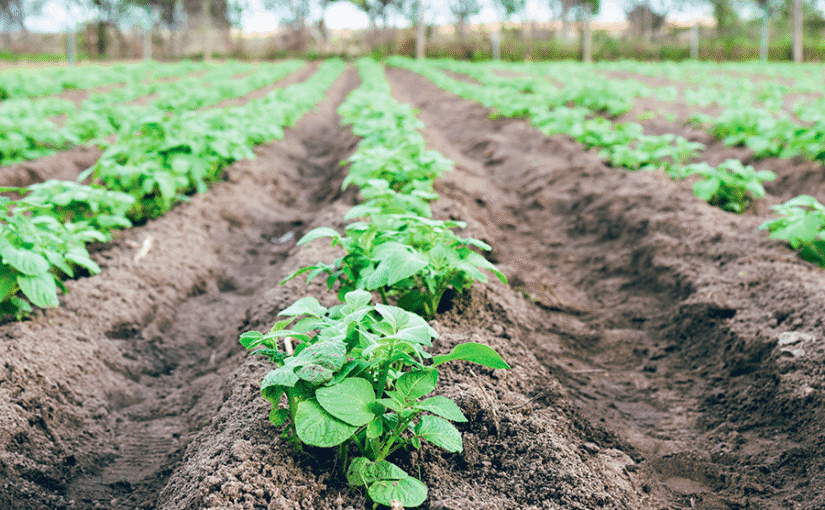
“When plants come into contact with chitosan, they behave as though they’re under attack from a chitin-based organism — a feeding, sucking pest,” said Trey Cutts, vice president of commercial agriculture for chitosan-based technology Tidal Grow AgriScience.
Chitosan application activates a circular RNA pathway, causing the plant to produce chitinase enzymes to break down the chitin.
“It’s similar to an immune response, but unlike a mammal immune response, it’s not weakening the plant,” Cutts said. “It’s actually making it more robust to grow through a lot of that stress.”

Washington-headquartered Tidal Grow mainly sources its chitosan from the shells of Pacific Northwest crabs, though Cutts said a new Texas facility will use shrimp exoskeletons from local seafood industries.
Wherever the chitosan comes from, it’s crucial to pinpoint the role a grower wants it to play, he said.
“Not all chitosan is made the same,” he said. “Chitosan is the name of the biopolymer molecule itself, but you get a wide range of characteristics that really impact what final outcome you’re going for.
“For instance, if we talk about soil health versus using it as a fungicide/nematicide, those are usually very different molecules. … If you’re formulating with the wrong inert (chemicals), or you’ve got the wrong combination of those chitosan molecules, you can actually have the reverse effect and the nutrient chelation will become a food source for the pathogen you’re trying to control.”
Tidal Grow’s scientists have screened for more than 10,000 molecule types, enabling its products — including Spectra, a foliar and soil-applied fungicide and nematicide and GenMax, a seed treatment — to target specific uses. Parent company Tidal Vision is a vertically integrated chitosan manufacturer, bioengineer and formulator, giving it end-to-end process control, Cutts said.
“We’ve been able to select molecules that are selective for certain pathogens for soilborne diseases while still having a positive influence on beneficial soil fungi,” Cutts said. “In the past, the feedback I’ve gotten in the industry is: ‘Well, I’ve tried chitosan, but it was inconsistent,’ or, ‘It worked sometimes but not all of the time.’
“I think that was just a lack of realization that if you’re not manufacturing and controlling for an exact spec of the chitosan molecule that you want, you’re going to get erratic results, because you’re going to have this potpourri of molecule sizes and characteristics.”
SUSTAINABLE SATISFACTION
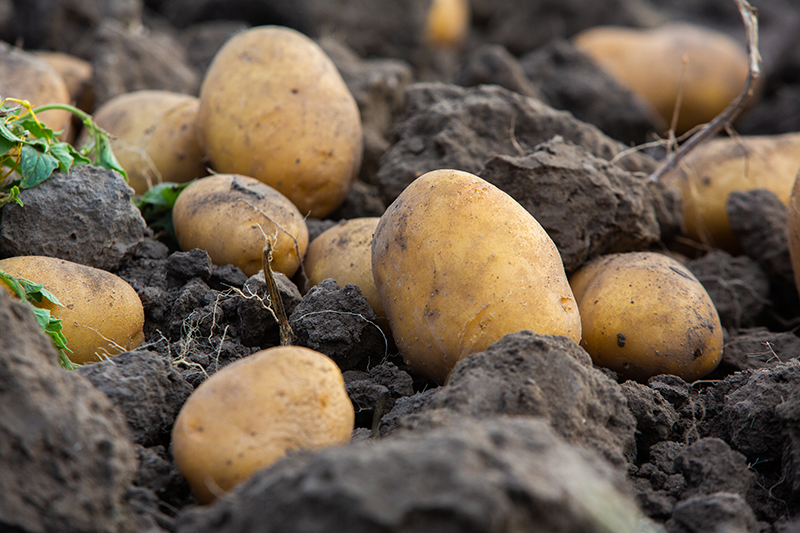
In potatoes specifically, Tidal Grow’s chitosan-based solutions have proven effective in controlling sclerotinia, a genus of fungi that can cause white mold, as well as blight and phythium leak, Cutts said.
“We’re bringing another mode of action to the table, and whenever you can stack modes of action, that is resistance management,” he said. “Yes, we’ve developed a pretty strong crop protection product — a nematicide, fungicide, bactericide — but we’re also using the molecule to be a delivery vehicle for nutrients or crop protection chemistries.”
Tidal Grow’s chitosan formulations are labeled 25b, a minimum-risk EPA designation, Cutts said, and its products integrate easily into growers’ existing crop protection programs.
“In a lot of our field trials, although we bring a level of direct efficacy on its own, we’re really seeing a synergistic impact when we go in the tank mix with traditional chemistry,” he said. “We’re also seeing an exponential increase in ROI, leaf protection and yield. So it’s really a nice tool for growers, because we’re not totally displacing what they’re doing today.
“If they’ve got chemistry that they’re comfortable with but need additional help or level of control, it’s a really tank mix-friendly way to add another mode of action to the tank.”
While grower satisfaction is Tidal Grow’s paramount concern, Cutts said chitosan helps achieve that goal in a sustainable way.
“A part of our production process is taking on a zero-waste philosophy,” he said. “So whether it’s the crab or the shrimp industry, we’re utilizing 100% of what comes into our production line. We’re able to manufacture a really high-quality seafood hydrolyzed biofertilizer that is a really cool soil health product because of all of the bioactive elements that you can bring to the soil, the nutrient load, etc., but it’s really core agronomy.
“We’re able to start with soil and go all the way through crop protection, plant growth and in-season fertilizer use.”
As demand for versatile, sustainable biological solutions grows throughout the agricultural industry, small creatures that scuttle across sea floors are rising to play a key role.
“Our founders have a goal of creating global systemic impact, replacing PFAS (per- and polyfluoroalkyl substances) and heavy chemicals around the globe,” Cutts said. “That’s what is fascinating to me. It’s this whole untapped, base material that can start to address a lot of issues, whether it’s plastics, heavy metals in our water treatments or harsh chemicals in ag.
“This isn’t just a one-off product formulation. This is an actual base chemistry to start to revolutionize the way we do things in ag.”