

Dwindling demand causing acreage anxiety
States adapting to declining contract volumes, other factors





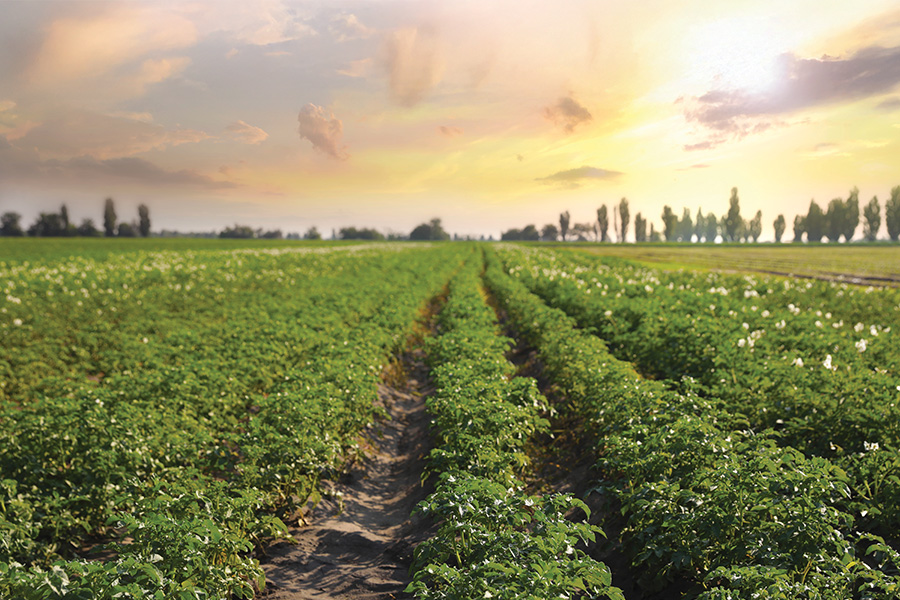
An April release from the Michigan Potato Industry Commission indicated problems, stating that fryers in nearly every processing state and province are facing “significantly reduced” contract volumes for the 2025 crop.
The reductions are, according to Michigan Potatoes, the “most severe cuts most growers have ever experienced,” leading to concern in the North American potato industry about the amount of uncontracted potato acres growers will plant in 2025.
So, is the situation that bleak? Jamey Higham, Idaho Potato Commission president and CEO, conceded “2025 has been a struggle” due to waning demand; however, he remains upbeat.
SUPPLY VS. DEMAND
Sean Ellis, Idaho Farm Bureau director of publications, agreed with Higham’s assessment.“The past couple of years have not been great for Idaho and U.S. potato growers, as farm gate prices for spuds have been on the decline,” Elllis said. “Idaho potato growers have faced a stiff financial challenge for a few years now, and that doesn’t look to change any time soon, unfortunately. Potato prices have barely been enough to cover the cost of production, and that has caused many potato growers to struggle financially.
“Pretty much everyone is projecting a smaller U.S. potato crop this year. How much smaller is the big question, and we won’t know that for sure until the final acreage numbers are out.”
“The reason for the projected decline is that the major potato processors have significantly reduced contract volumes for the 2025 crop,” Ellis said. “The simple answer is that there is just more supply than demand right now, and the system will take time to work through that.”
Higham attributes some of the blame to inflationary pressures on food, with shoppers choosing other items over potatoes.

Historically, Idaho has grown Russet Burbank, but the variety continues to decline in acreage, being replaced largely by Dakota Russet and other varieties for processing. Photo courtesy of Idaho Potato Commission.
“There are a lot of people struggling financially right now, and therefore they are having to make choices about what they spend their money on,” he said.
Idaho’s harvest starts in August, continuing through to the second week of October. As well as fresh market potatoes, product that goes into storage will be used until July 2026, Higham said.
Historically, Idaho has grown Russet Burbank, but the variety continues to decline in acreage, being replaced largely by Dakota Russet and other varieties for processing. The state is also growing more yellows and reds every season.
“The vast majority is sold domestically,” Higham said, although he said substantial volumes are now being exported to Mexico.
PNW PROJECTIONS
While Idaho leads the country in potato production, Washington and Oregon are also major spud producers. Officials in both states remain optimistic about the upcoming season.Dale Lathim, Potato Growers of Washington executive director, said recent months have been favorable in terms of weather, with warm soils to start the season and above- average temperatures through May. Both factors, he said, have helped get the Washington crop off to a great start despite planting being delayed by a week to 20 days as producers worked through the last of the 2024 harvest.
“At this time, the crop is ahead of last year, which was ahead of the historical average,” Lathim said. “We are expecting a very solid crop in terms of both yield and quality.”
However, a pattern similar to Idaho is likely to be replicated in the state, with Washington expected to produce less volume than 2024 because of fewer contracted acres.
“We expect yields and quality to be at or above historical averages,” Lathim said.
Washington growers typically plant in early March and begin harvesting in mid-July, with a season that stretches to early November.
“Both processors and fresh shippers make use of the out-of-field time frame and run the hardest in September and October before ramping back to normal schedules for the remaining 10 months,” Lathim said.
With more than 90% of production destined for processing, the state focuses primarily on Russet Burbank, Umatilla Russet, Ranger Russet and Clearwater Russet for frozen, while smaller volumes of Russet Norkotah are grown for the fresh market.
Like Idaho and Washington, Oregon has seen acreage decline, especially for processing, which could reduce the typical 40,000 acres in production in the state. This acreage annually produces between 2.6 to 2.7 million pounds, starting in mid-July and running through September.

Despite market forecasts estimating that Idaho potato acreage will decline 1.6% in 2025, largely because of reduced contract volumes, the Idaho Potato Commission is among state organizations maintaining optimism. Photo courtesy of Idaho Potato Commission.
“We always have good quality potatoes coming out of Oregon,” said Gary Roth, Oregon Potato Commission executive director. “We usually have favorable weather. We always have good soil.
“We have seen some acreage cutbacks in the processing sector. We wish that wasn’t happening. It’s something we’re dealing with, and we think we’re going to have a good crop.”
Roth has a simple explanation for declining acreage: “The processors are contracting for less,” he said. “It’s interesting because domestic demand for frozen potato products remains strong, but we’ve seen the processors cut back on acreage. It’s something that we’re in the process of trying to understand better.”
Roth’s best guess is that increased foreign competition — principally from China and India — in the U.S. marketplace and in traditional export destinations in the Pacific Rim is causing the U.S. to lose market share.
One way forward could be investments in new varieties and better pest management tools taking place across Oregon, Washington and Idaho through the land-grant institutions of Oregon State University, the University of Idaho and Washington State University.
“They work together very closely and are making good progress in serving the growers of all three states,” Roth said.