

A closer look at key factors at play in disease defense in storage
Managing diseases in storage always starts with questions about field conditions. Experts share starting points for successful disease management.





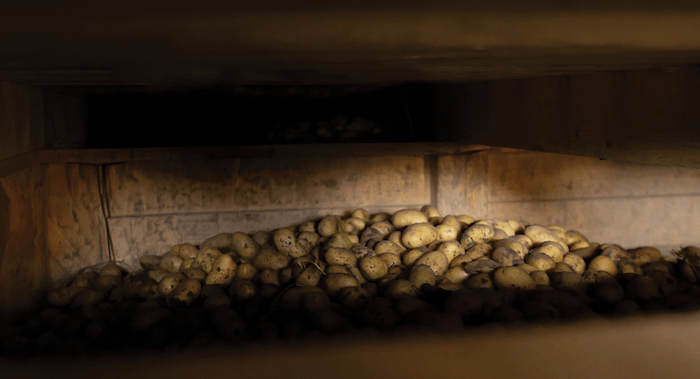
Managing diseases in storage always starts with questions about field conditions. Experts from top potato-producing states shared starting points for successful disease management.
Amanda Gevens, University of Wisconsin professor and Extension specialist in vegetable diseases, said good storage starts with healthy tubers.
“A strong disease control program during the growing season is the best disease control program for storage,” she said. “What pathogens are in the soil, crop debris and seed?”
Moisture is also a key consideration, said Jaime Willbur, Michigan State University associate professor in potato and sugar beet disease management.
“What are the field moisture conditions?” he said. “What was the amount of rain? Is there any standing water? Wet conditions can lead to more soft rot in storage.”
Another important factor at play is harvest temperature, said Julie Pasche, North Dakota State University professor and potato pathologist.
“Pink rot, pythium leak and soft rot all like warm temperatures,” she said.
Experts advised looking for any internal rot or external symptoms of disease when doing test digs. This can be a guide to what to look for at pick-out and in storage.
Digging into diseases
Try to keep anything that looks diseased from going into storage — even if it means not harvesting bad spots in the field. Problem fields can also be harvested first and immediately marketed or shipped for processing.
Pink rot, pythium leak, fusarium dry rot, bacterial soft rot, silver scurf, late blight and black dot are all on the problem list, as well as others.
“Focus on the four major rotting diseases first,” Willbur said, as pink rot, leak, dry rot and soft rot can spread fast in the bin.
Blemish diseases like silver scurf and black dot can worsen in storage and affect marketability but will not necessarily cause a bin to rot.
“If it’s a rotting disease, it’s speed: How quickly will it spread?” Willbur said. “Then it gets into shipping. How quickly can the tubers be shipped?”
“Any diseased tuber next to a healthy tuber has the potential for contamination,” Pasche said. “Do anything you can to limit that spread.”
Enlarged lenticels and wounds are entry points for disease into the tubers. Lenticels can be kept open by overwatering, especially late in the season. If some areas in a field are still growing while others are senescing, irrigating everything will mean some areas are overwatered.
Wounds come at harvest, which makes good handling and good piling essential. Handling and temperature are crucial to disease management, Willbur said.

Time and temperature
Recommended harvest temperatures vary around the country, but there are universal concepts.
The range of ideal air temperatures for harvesting a healthy crop is broad, about 50° F to 70° F. For tuber pulp temperatures, growers ideally want to see 50° F to 60° F.
“It’s during the temperature and moisture extremes where we see problems,” Gevens said. “The tubers can shatter if they’re too cold and wet, and bruising can result if they’re too warm and dry — although in the harvest rush these conditions are sometimes hard to avoid.”
Tubers will continue to increase in temperature when first put into storage because of field heat. Efforts to cool the tubers to slow disease development will slow wound healing.
Some growers manage temperature by harvesting at night when it’s cooler, while others have added storage cooling capacity. If tubers carry a higher risk for disease or need to be stored for a contract, growers may need to use a postharvest fungicide.
Sanitizers, like phosphorous acid, chlorine dioxide or hydrogen peroxide, are fungicides that can be applied through the air flow system after piling. The storage humidity has to be high when using sanitizers, around 95%, the experts said, as moisture is needed to carry the sanitizers throughout the piles.
Sanitizers are routinely used in some parts of the country but not in others.
“We really struggle with high outside humidity in North Dakota,” Pasche said. “Using a sanitizer isn’t a practice we commonly talk about.”
Stadium, a postharvest fungicide made by Syngenta, is labeled for control of silver scurf and Fusarium dry rot and is applied by a light mister on the piler. Product-specific recommendations should be closely followed.
Limiting spreading in storage
If a serious disease problem emerges in storage, how do you keep it from spreading to healthy potatoes?
“If you have a problem, are your humidity and environmental controls solving it?” Willbur said.
If not, some operations consider applying a sanitizer, he said. If it’s a serious problem, multiple applications — even up to two in one week — could be required. A diagnostic lab can pinpoint the problem.
“Try to get the tubers dried out or get them out of there,” Pasche said. “There are a lot of reasons why potatoes get shipped out, and diseases are one of them.”
Monitoring carbon dioxide levels is also key, as bacterial pathogens are more active in environments with less oxygen.
“Make sure the fresh air flow is abundant,” Gevens said.
Increasing carbon dioxide levels can mean oxygen levels are too low if disease is happening in a bin.
“Preventative management is preferred,” Willbur said, especially in Michigan, where “we have long-term storage that can go until May or June. It’s about managing the inoculum load, environment, humidity and temperature, and how long the tubers are in storage.”
Pasche said advance planning can reduce storage issues.
“It’s knowing what you’re going to do next year, so you’re not setting up a storage that may have problems,” she said.