

Farm bill fails to advance out of Senate committee
The Senate Agriculture Committee failed to advance its version of the farm bill on Aug. 6, with the legislation failing 10-11 amid disagreement over SNAP cuts.





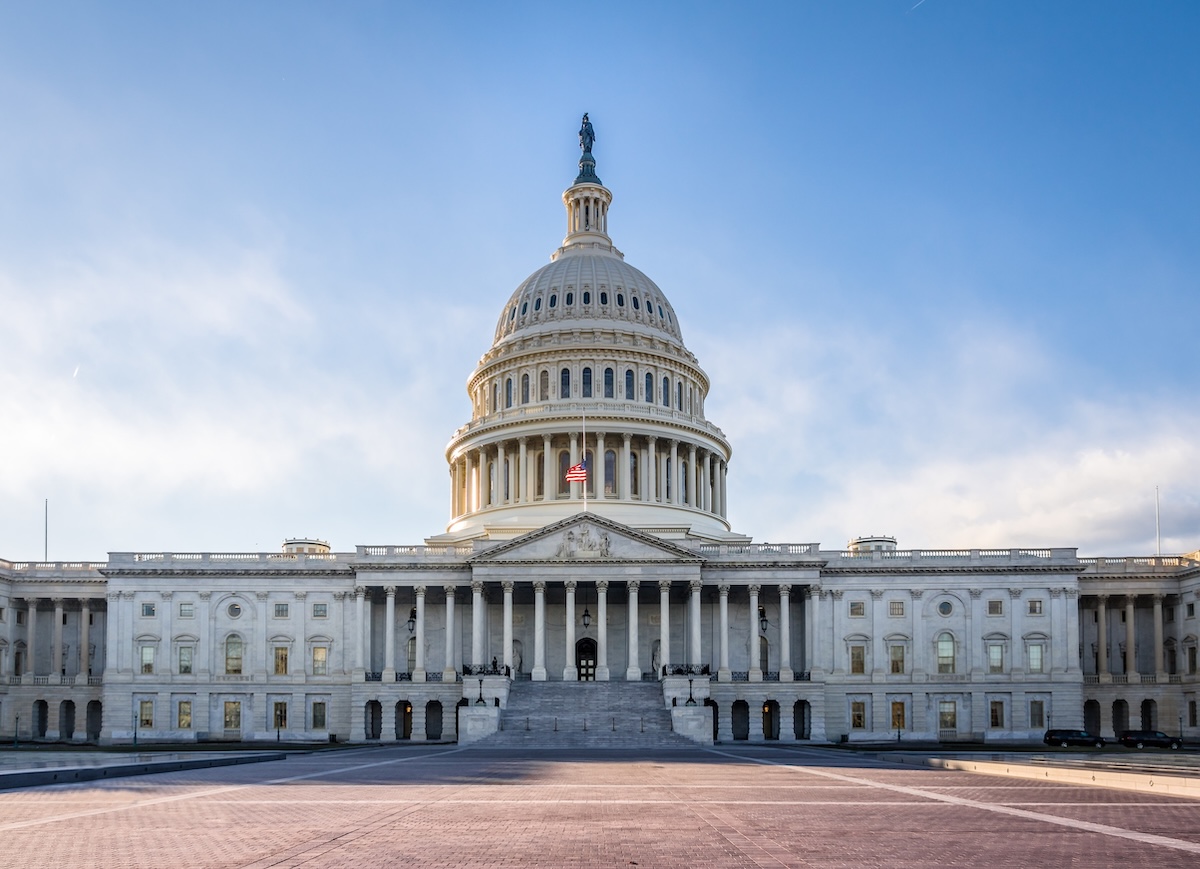
The Senate Agriculture Committee failed to advance its version of the farm bill on Aug. 6, with the legislation failing 10-11 amid disagreement over cuts to the Supplemental Nutrition Assistance Program (SNAP).
The bill (.pdf), introduced by committee chair John Boozman, also sought to steer conservation programs more heavily to drought resilience, while ramping up thinning of trees in national forests to reduce wildfire risks.
Boozman recessed the panel indefinitely after the vote, meaning that he can call members back to revisit the bill at any time, including in September after the chamber’s August break.
Democrats stuck to a demand for a two-year delay to Republicans’ requirement that states share the cost of providing SNAP benefits, according to reports from media outlets including Politico.
“I want us to get to a bipartisan agreement. I think people know that that is how I have operated in this place, and that’s what I want to get done,” Sen. Amy Klobuchar, (D-Minn.), the panel’s ranking member, said. “But first and foremost, that includes addressing this ridiculous (SNAP) situation.”
Boozman offered a one-year delay to SNAP changes, language to authorize year-round E15 fuel sales and increased funding for a program that distributes food through food banks.
“I also appreciate that the Chairman has acknowledged the problem with the SNAP cost shift to states and counties,” Klobuchar said in a statement. “But amid tariff-related rising grocery prices in states across the country where SNAP has been critical, this is only a one-year fix. It still advantages high error rate states over states with mid-level error rates. A state with an error rate twice that of Minnesota will pay nothing in the second year, whereas states that have reduced their error rates will still be disadvantaged over high error rate states.”

Among the special crop considerations in the Senate version was the establishment of a Specialty Crops Coordinator to address the needs of producers.
The Specialty Crop Farm Bill Alliance (SCFBA) thanked senators for proposing amendments relating to specialty crops, including measures to make the Specialty Crop Emergency Framework mandatory and enhance the Federal Crop Insurance Program for specialty crop producers,
“Despite today’s setback, we remain hopeful the Senate can find a bipartisan path forward to pass the Agriculture Act of 2026,” SCFBA said in a statement.
The U.S. House passed its version of a farm bill by a 224-200 vote in late April.
The National Potato Council (NPC) stressed the need for rapid action before the Aug. 6 debate.
“Clearly the ag leaders on Capitol Hill are doing everything in their power to get a modernized, competitive farm bill enacted this year,” NPC president Ben Sklarczyk said in a statement. “Given all the global uncertainty, successfully completing this goal will be very positive for family farms across the country.”
Boozman released a draft of the House farm bill on June 23.
Main differences between the House and Senate versions include state funding for federal nutrition programs, E-15 fuel regulations and trade promotion program funding amounts.
The most recent farm bill, passed in 2018, has been extended three times. Current progress marks the closest Congress has been to getting a new farm bill passed since the expiration of the 2018 Farm Bill on September 30, 2023.
Submit Potato Expo 2027 proposals
Proposal submissions for Potato Expo 2027 are now open. Presenters are invited to submit proposals for speaking opportunities on the Expo stage, breakout panel discussions or single-speaker discussions.
Proposals should showcase forward-thinking ideas that advance potato production, introduce innovative on-farm solutions, highlight emerging industry trends or spark creativity and collaboration across the supply chain.
Expo stage speakers will present for 20 minutes in a single-speaker or panel format, followed by a question-and-answer session. Breakout panel discussions will include a 30- to 40-minute session and up to four participants, while single-speaker sessions will take 20 to 30 minutes, including Q&A.
Proposals are due Sept. 10, and selected participants will be notified Oct. 9.
Editor’s note: This story has been updated to reflect the bill failing to pass the Senate committee.