

2026 Spudman Impact Award winners making a difference
Meet Spudman’s 2026 Impact Award winners. The eight honorees are making a difference in all sectors of the potato industry.





Our 2026 Impact Award winners once again testify to the truth of this statement. The elite eight featured in this group, ranging from longtime farm managers to respected researchers to innovative film producers, demonstrate the deep knowledge and passionate commitment that unites potato growers, producers and promoters across the nation and beyond.
Please join Spudman in congratulating this year’s Impact Award winners.
Dustin Begovich
President, Idaho Studio
Begovich’s video production company, founded in 2015, had worked with a range of industries — from mining to military — before partnering with Idaho grower Wada Farms on a branding project.
That’s when a switch flipped.
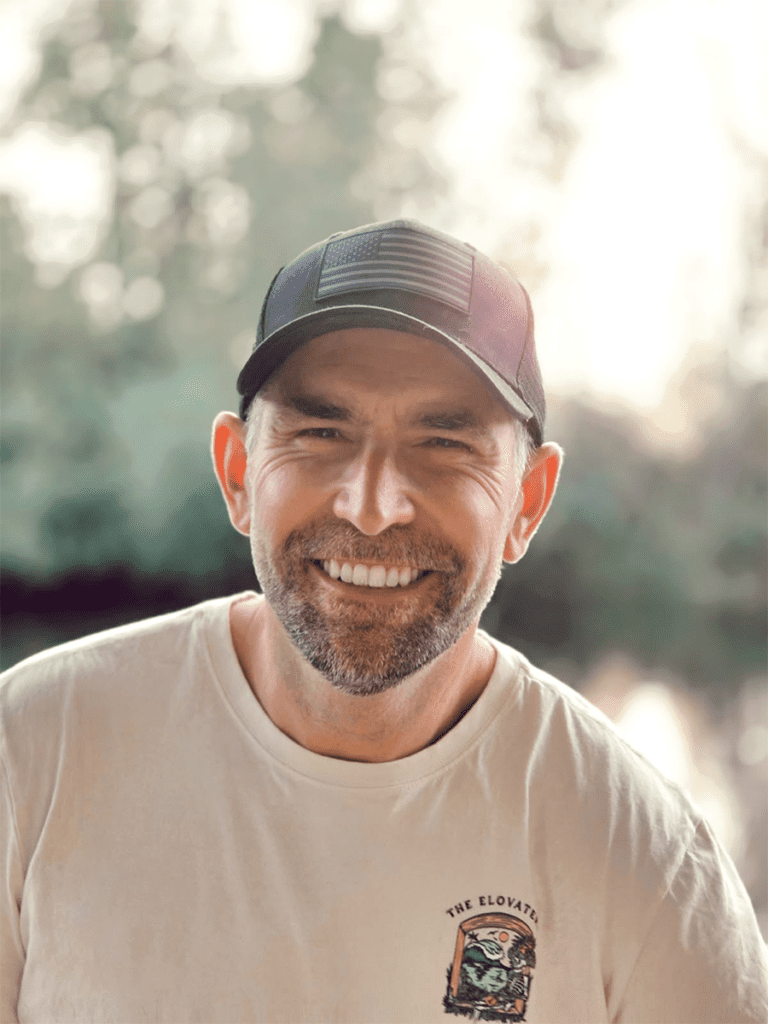
“This was the moment my career shifted gears and I decided to focus on agriculture,” Begovich said. “I have since produced a documentary film about the potato industry after working with many industry businesses and commissions.”
“Dustin shows his clients and the industry the challenges and rewards of growing potatoes,” an Impact Award nominator wrote. “He captures the beauty of success (and) highlights the startup and the family legacy very well.”
In 2023, Idaho Studio built a production location and office on a cattle ranch outside of Eagle, Idaho, called Stack Rock Ranch. The on-film authenticity in the company’s work stems from a real-life connection.
“I’ve worked with a wide range of industries across the country,” Begovich said. “Agriculture is full of my people — people that care about family, fishing, hunting and other things I care about and enjoy.”
A husband and a father of four boys, Begovich is also a grower himself.
“I grew a dozen varieties last year, and my favorite was German Butterball,” he said. “They were delicious and very different than spuds that I regularly enjoy.
“In the last two years I filmed quite a few harvests, and seeing different varieties in different soils is always extremely exciting.”
Begovich’s career has blossomed from taking to heart an apropos piece of advice: Find your niche.
“There are so many great folks in the industry — getting to interview them, learn from them and laugh with them is so enjoyable,” he said. “I wouldn’t have been able to advocate for the potato industry if I hadn’t spent years understanding it deeply.”
Amanda Gevens
Professor and Extension specialist,
University of Wisconsin-Madison
Amanda Gevens lists helping others find their professional footing as one of the proudest accomplishments in her career — which is unsurprising, considering one of her sources of inspiration.
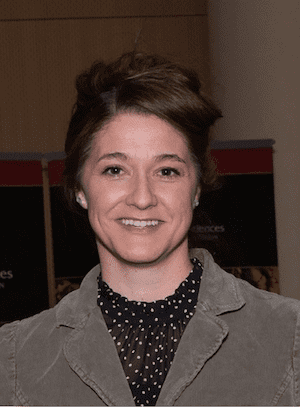
Gevens, who holds the University of Wisconsin-Madison CALS Fritz Friday chair for Vegetable Production Research, is a well-known plant pathogen and disease management expert. The administrative director of the Wisconsin Seed Potato Certification Program, Gevens was named among the 2020 Outstanding Women of Wisconsin Agriculture by the Wisconsin Potato and Vegetable Growers Association and also received the 2022 UW Madison CALS Agricultural Research Station research award.
“I am proud of the service I’ve provided in my career,” Gevens said. “To me, this includes the students I’ve served through the provision of opportunities and mentorship. They’ve moved into impactful positions in academia, industry, government and agriculture. This includes the growers and industry partners whom I’ve served through disease management strategies or policy adjustments.”
Such a service-forward attitude makes sense for someone who took to heart lessons learned watching Mister Rogers’ Neighborhood. Advice that stuck with Gevens included Fred Rogers’ encouragement to be one the world’s helpers when it feels there are none to be found, to address tough topics with gentleness and emotional maturity, and to be cognizant that small acts of care can make a big difference.
Hailing from Southold, New York, Gevens earned her bachelor’s degree from Muhlenberg College in Allentown, Pennsylvania, before adding a master’s in plant pathology from Purdue University and a doctorate in plant pathology from Michigan State.
A mother of three, Gevens enjoys supporting the youth of her community, including young scientists, and lists her family in a group of positive influences that also includes her UW-Madison research and Extension colleagues.
“I greatly enjoy the diversity of work that I get to take on in my position,” she said. “In a given day, I can be in the field evaluating potato plants for disease in the morning and, by afternoon, participating in a graduate student mentoring meeting to help support the next generation of plant pathologists.”
All in a day’s work for someone striving to follow Mr. Rogers’ advice.
Chris Hansen
CSS Farms, general manager – New York
A fourth-generation potato farmer, Chris Hansen doesn’t do math when folks ask him how long he’s been in the potato industry.
Instead, he tells them: “I was practically born in a potato field.”
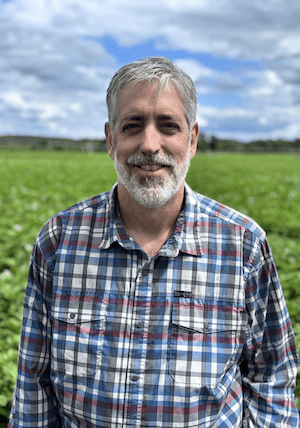
Hansen is also firmly rooted in Bliss, New York. At CSS Farms for seven and a half years, he spent nearly 11 years as a farm manager at predecessor McCormick Farms.
As an Impact Award nominator wrote: “Over the years, Chris has transformed potato farming in New York through his innovation, leadership and industry advocacy.”
The nominator noted that under Hansen’s direction, CSS Farms has “doubled in size, launched a new seed farm to strengthen the state’s seed pipeline and emerged as a leading supplier of high-quality chip potatoes.”
A 1995 graduate of Michigan State University, Hansen is a member of the Potato Industry Leadership Institute’s Class of 2014. He’s also a long-time member of two spud-focused organizations, serving since 2012 with the Empire State Potato Growers — of which he’s currently vice president and chair of the variety development committee — and since 2015 with Potatoes USA, where he’s co-chair of the potato research committee.
“I enjoy the interaction I have with others on a daily basis, although I do not consider myself an outgoing person,” Hansen said. “Every day presents a new challenge to tackle, and no two days of farming are ever alike.”
Hansen cites his earliest farming examples — his grandfather and father — as among his biggest influences, and they are likely sources of the best advice he says he’s ever received: “Take responsibility and own up to your shortcomings, and give credit to those who helped you with your success.”
Hansen is proudest of the relationships he’s forged in the “relatively small world” of the potato industry, and one of those relationships led to a bit of legacy.
“My current favorite variety is Bliss, named by Walter De Jong after Bliss, New York, because of the work our farm put into testing and developing it,” Hansen said.
Todd Jensen
Vice president of ag operations, Wada Farms
The business of growing potatoes is not work for Todd Jensen. It’s an extension of a life rooted in agriculture.
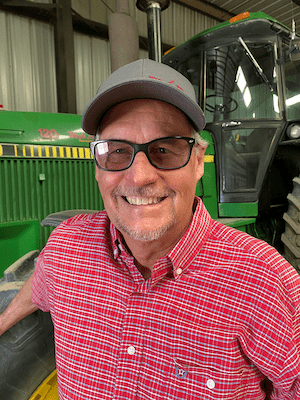
From working alongside his dad on a small family farm to overseeing Wada Farm’s 30,000-acre operation, Jensen has stood tall while digging in the dirt.
“I have always loved working outside,” he said. “There is nothing better than putting a seed in the ground and watching it grow into something that provides food for people around the world.
“Long hours and seven-day work weeks during the growing season have never bothered me. It is the life I love.”
A native of Blackfoot, Idaho, Jensen has been with Idaho Falls-headquartered Wada Farms, one of the country’s largest grower-shippers of fresh potatoes, onions and sweet potatoes, for 45 years. His dedication to his career and community hasn’t gone unnoticed; Jensen has been named the Shoshone Bannock Tribes Farmer of the Year as well as the Elk of the Year by his local lodge.
When Albert Wada, son of farm founder Frank and a 2017 inductee into the Eastern Idaho Agriculture Hall of Fame, stepped back from day-to-day operational leadership, Jensen was tapped to supervise the farming operation.
As an Impact Award nominator put it: “Todd has been with the Wadas for over 40 years and has been the go-to person for their whole farm. Todd is probably one of the best farmers and managers I know.”
Jensen attributes his success to keeping in mind “the importance of teamwork and surrounding yourself with good, dedicated people who share the same passion for this work.”
That includes his father, who remains his biggest influence.
“I learned from my father — from irrigating fields, driving a tractor and many other tasks that were expected of me,” Jensen said. “He was a soft-spoken and humble man who instilled in me the importance of hard work and doing things the right way.”
Marcus Meadows-Smith
CEO and founder, BioConsortia Inc.
Biological technology game changer Marcus Meadows-Smith has made a career out of making connections.
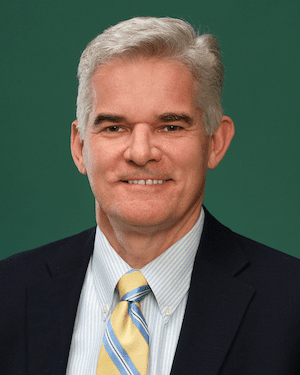
Meadows-Smith’s groundbreaking agricultural career began in the 1990s with specialty chemicals companies Crompton and Chemtura. As CEO of AgraQuest, a position he held from
2006-2012, he helped launch industry-impacting biofungicides, including global favorite Serenade, as well as microbial and nitrogen-fixing products.
In 2012, crop protection giant BayerCropScience acquired AgraQuest for $425 million, ushering in an era of partnerships between biological companies and the ag chem industry.
In 2014, Meadows-Smith founded California-headquartered BioConsortia, which brings the sustainable focus that has marked his career to advances in plant protection, fertility and yield.
“I am proudest of helping build companies that bridge the gap between scientific discovery and on-farm benefit,” he said. “I was drawn to potatoes because they are central to global food security, yet the room for innovation in this crop is immense. Working with biologicals showed me just how transformative new technology can be for yields, grower profitability and sustainability.”
A native of Kent, England, who credits his mum with nurturing his love for nature, Meadows-Smith is happiest working outdoors. His family owns and operates a vineyard in Davis, California, where it also grows olives, lavender and fruit.
“The best part of my job is transforming breakthrough science into practical solutions that help growers and the environment,” Meadows-Smith said. “What motivates me most is working with a team of talented scientists, innovators and industry partners, and seeing our ideas and science translate into real, measurable impact on farms.”
Meadows-Smith, a Northern California finalist for the Ernst & Young Entrepreneur of the Year award in Technology & Life Sciences, has also helped develop innovations recognized with Agrow Awards for sustainable biological crop solutions. His vineyard offers tours that educate the public about sustainability and soil health, while fruit from its orchard is donated to a local food bank.
“I love to combine and share my passions for farming, education and sustainability in ways that make a meaningful impact to the local community,” he said.
Sagar Sathuvalli
Professor, Oregon State University
Of his myriad accomplishments in potato breeding research and advancements, Vidyasagar “Sagar” Sathuvalli’s most impressive may be his willingness to share.
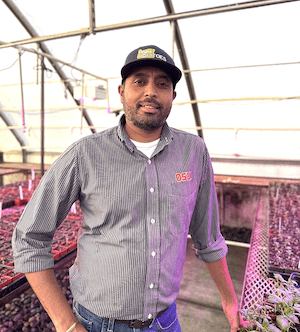
Sathuvalli, who earned both a master’s and a doctorate at Oregon State, has advised or co-advised 10 graduate students, served on the graduate committees of another 12 and
mentored 10 undergraduates, according to an Impact Award nominator. In addition, he has hosted or trained five postdoctoral researchers or visiting scientists, all while serving on various industry committees and as senior editor of the American Journal of Potato Research for more than 10 years.
“Potato is an important food source globally, and its importance in food security has given me a real appreciation for the potato,” Sathuvalli said. “My background in plant breeding permits me to pursue creative solutions to potato production problems.”
Director of the Oregon Potato Breeding & Variety Development Program since 2012, Sathuvalli has chaired the Tri-State Potato Research and Breeding Program’s technical committee for more than a decade and serves on the board of the Oregon Seed Certification Agency. His favorite potato variety was recently released by the Tri-State program: Rainier Russet, which he appreciates for its taste.
A native of South India, Sathuvalli received the 2025 Briskey Award for Faculty Excellence from Oregon State’s College of Agricultural Sciences, topping a long list of accolades and peer-reviewed publications.
“My work to breed nematode and other soil-borne pathogens resistance into marketable potatoes is an accomplishment of which I’m proud,” he said. “I’m also proud to be able to contribute to the training of the next generation of plant breeders.”
However, Sathuvalli’s greatest sense of fulfillment doesn’t stem from the recognition he’s received throughout his extensive career.
“The best thing is serving the potato industry, from growers to processors, packers and distributors,” he said. “I have come to know many key players in the industry. I receive real satisfaction in the collaborations that solve industry problems.”
Jay Scheidt
Business development manager, Bedford Industries
Growing potatoes may seem an age-old practice, rooted in time and tradition. The industry, however, relies on cutting-edge technology to keep moving forward.

A prime example is the work Jay Scheidt spearheads at packaging pioneer Bedford Industries.
The third-generation company, based in Minnesota, has specialized in bag closures since the production of its first twist tie in 1966. The launch of its CloseIt product line nearly a decade ago was a game changer.
As an Impact Award nominator noted, CloseIt provides 30% more closures per spool for higher-efficiency packing houses while offering high-quality print directly on the clip for branding and identification, saving money for clients who switch from a flag option.
“When we launched our CloseIt product line nearly 10 years ago, this enabled me to get acclimated to the potato industry and give a fresh look at how potato bags are closed,” Scheidt said. “It’s been rewarding making potato bags more appealing to consumers with custom print on the closures. It’s also been very rewarding helping sheds with production efficiencies by putting more clips on our spools.”
A 12-year veteran at Bedford, Scheidt is motivated by the people he helps on a daily basis.
“Meeting with customers and prospects gives me natural energy every day,” he said.
Scheidt is a native of Worthington, Minnesota, where he serves as treasurer for the Worthington Windsurfing Regatta & Music Festival and was named the Area YMCA Volunteer of the Year. He holds undergraduate and graduate degrees from the University of Minnesota.
“I’m proud to still be in my hometown working for a great company and raising a family,” he said.
Scheidt cites his parents as his biggest influences.
“Unfortunately, they passed away too soon, but these experiences allowed me to have a fresh perspective on what a blessing every day truly is,” he said. “It motivates me to bring positive energy to every moment I have on this earth.”
Jonathan Whitworth
Research plant pathologist,
USDA-Agricultural Research Service (ARS)
As one of nine children, Jonathan Whitworth learned early the value of hard work.

Whitworth’s career sprouted from a summer job at an eastern Idaho potato farm to a role as a renowned researcher and plant pathologist. He has worked to develop disease-resistant seed from Idaho to Kenya, earning a place as an Honorary Lifetime Member of the Potato Association of America.
He finds satisfaction in the rewarding but time-consuming work of varietal development, which can take up to 15 years to produce a commercially viable potato.
“In my job, I get to be involved in that process from the cross of two parents to form true potato seed,” Whitworth said. “Along the way, we fry, disease test, evaluate yield, and then find a name for the variety that will now meet the market and be a benefit to the grower and industry.”
Whitworth is most proud of developing plans and sourcing seed for Potato Virus Y demonstration plots that have been held in three states during the last eight years.
“These have served as a core learning moment for how PVY expresses in different varieties,” he said.
The recipient of the USDA-ARS Outstanding Technology award in 2010 and 2023, Whitworth discovered his favorite variety, Huckleberry Gold, through work with the Northwest Potato Variety Development Program.
“It is a beautiful potato that holds its purple skin and yellow flesh colors when it is cut, seasoned and roasted in the oven,” he said.
Whitworth’s passion for potatoes was nurtured during a two-year church mission in California’s agriculture-rich San Joaquin Valley. He maintained a spud-centered focus at Utah State (bachelor’s degree) and Oregon State (master’s and doctorate degrees) while following the early example set by his parents.
“They raised nine children by working together toward their goals,” Whitworth said. “My dad worked hard as a weed researcher at New Mexico State University, and my mom worked equally hard to cover things at home. They always told us they were investing in children, not in things.”